How Federal Reserve reluctance to cut rates amid rising inflation is strengthening the US dollar against major currencies
MarketAlleys Desk
Published · 2 min read
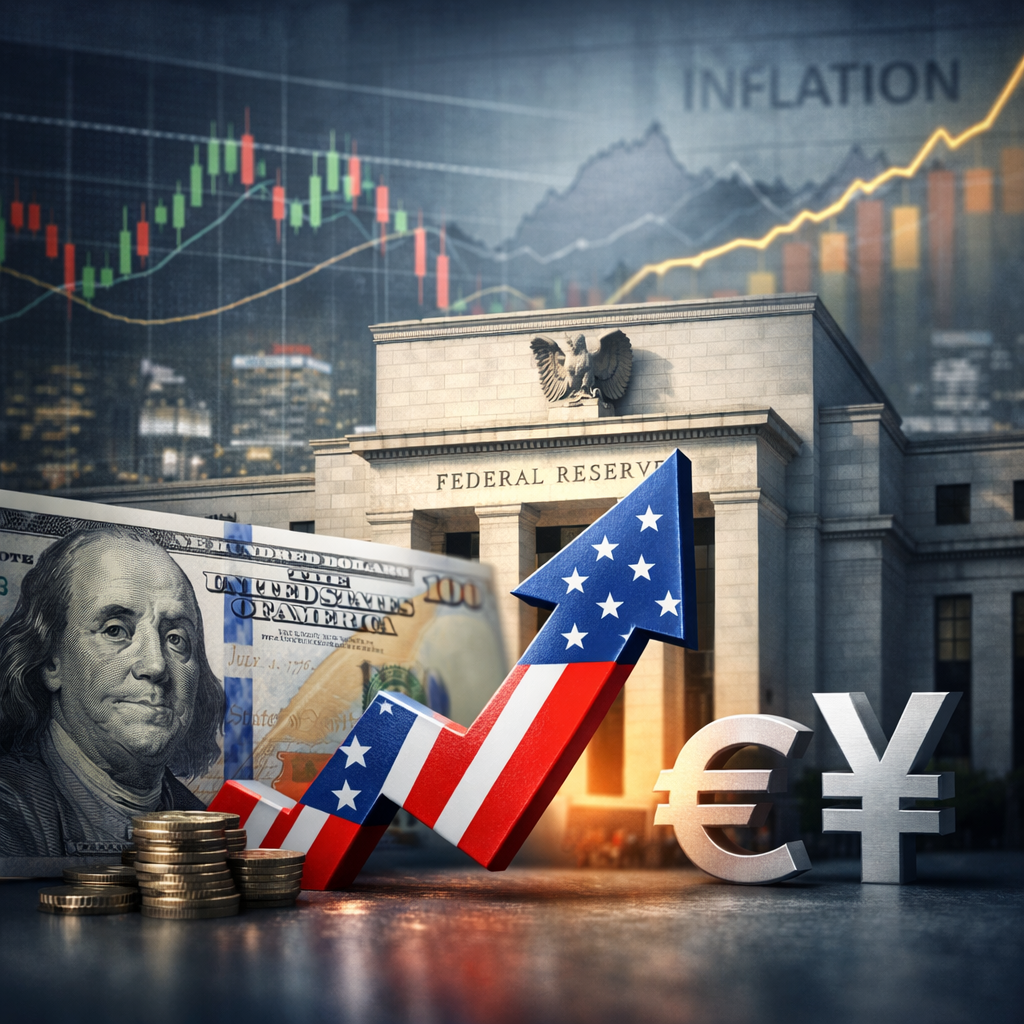
The US dollar continues to demonstrate strength across major currency pairs as shifting expectations around Federal Reserve policy reshape the forex landscape. Investors are increasingly adjusting their outlook in response to persistent inflation pressures, which are limiting the central bank’s ability to move toward policy easing in the near term.
Recent economic data has reinforced the view that inflation remains more resilient than previously anticipated. While there have been periods of moderation, underlying price pressures continue to persist across key sectors. This has led market participants to reassess earlier expectations of imminent rate cuts, instead pricing in a more cautious and delayed policy path from the Federal Reserve.
As a result, the US dollar is benefiting from a higher for longer interest rate environment. When interest rates remain elevated, dollar denominated assets tend to attract increased capital inflows, as investors seek stronger returns compared to other major economies. This dynamic is providing consistent support for the currency, particularly against counterparts where central banks are either considering easing or facing weaker economic conditions.
The euro, for example, is under pressure as growth concerns across the eurozone complicate the European Central Bank’s policy outlook. Similarly, other major currencies are struggling to gain traction as their respective economies show signs of slowing momentum. This divergence in economic performance and monetary policy expectations is reinforcing the dollar’s relative strength in the global forex market.
In addition to monetary policy, broader risk sentiment is playing a supporting role. Periods of geopolitical uncertainty and market volatility tend to drive demand for safe haven assets, with the US dollar remaining one of the primary beneficiaries. This dual support from both interest rate dynamics and risk driven flows is creating a strong foundation for continued dollar resilience.
However, this trend is not without risks. A sudden shift in inflation data or a clear signal from the Federal Reserve indicating a change in policy direction could quickly alter market positioning. Currency markets are highly sensitive to forward guidance, and even subtle changes in tone can lead to sharp movements.
Looking ahead, traders will remain focused on incoming economic indicators and central bank communication. Inflation readings, labor market conditions, and broader economic activity will all play a critical role in shaping expectations. For now, the Federal Reserve’s reluctance to cut rates is acting as a key driver, keeping the US dollar supported and reinforcing its position as a dominant force in the global forex market.
Terms in this article
Federal Reserve (Fed)
The US central bank, with a dual mandate of maximum employment and stable prices.
Inflation
The rate at which the general level of prices rises over time, reducing what money can buy.
Currency pair
Currencies are quoted in pairs such as EUR/USD.
Central bank
The institution that sets a country's or region's monetary policy, issues its currency and oversees the banking system — for example the Federal Reserve, European Central Bank, Bank of England and Bank of Japan.
Price-to-earnings ratio (P/E)
Share price divided by earnings per share.
Ask about this story
Questions are answered only from this article and the sources it cites.
MarketAlleys provides news and analysis for information only; it is not investment advice or a recommendation to buy or sell any security. Markets involve risk. Risk disclaimer.
Was this useful?
Report an issue with this article
Get the Daily Brief
What moved, why, and what matters next — every morning.
Related coverage

USD/KRW After The Won’s Best Session In A Month And A Firmer Dollar
USD/KRW is not trading a slogan about Asia. It is trading the won after its best session in a month against a dollar that is still firm into a Federal Reserve path and into a Washington meeting with Beijing.
MarketAlleys Desk · · 2 min read

GBP/USD After The United Kingdom CPI Print Into The Bank Of England Decision
GBP/USD is not trading a slogan about Britain. It is trading a consumer price print that landed one day before the Bank of England speaks and on the same day the Federal Reserve speaks. The pair is the residual of those two paths.
MarketAlleys Desk · · 2 min read

USD/JPY Into A Same Week Fed Hike And A Bank Of Japan Hike
USD/JPY is not trading a slogan about the yen. It is trading two policy meetings in one week. The Federal Reserve is priced to lean tighter after hotter core prices and a fuel shock.
MarketAlleys Desk · · 2 min read

USD/CAD After Canadian CPI And A Repriced Bank Of Canada Hike Path
USD/CAD is not trading a slogan about North America. It is trading a same week inflation print in Canada against a Federal Reserve meeting that the market already treats as a hike. Canadian consumer prices land first.
MarketAlleys Desk · · 2 min read