Oil Market Reprices Higher as Hormuz Tensions Disrupt Global Supply Expectations
MarketAlleys Desk
Published · 2 min read
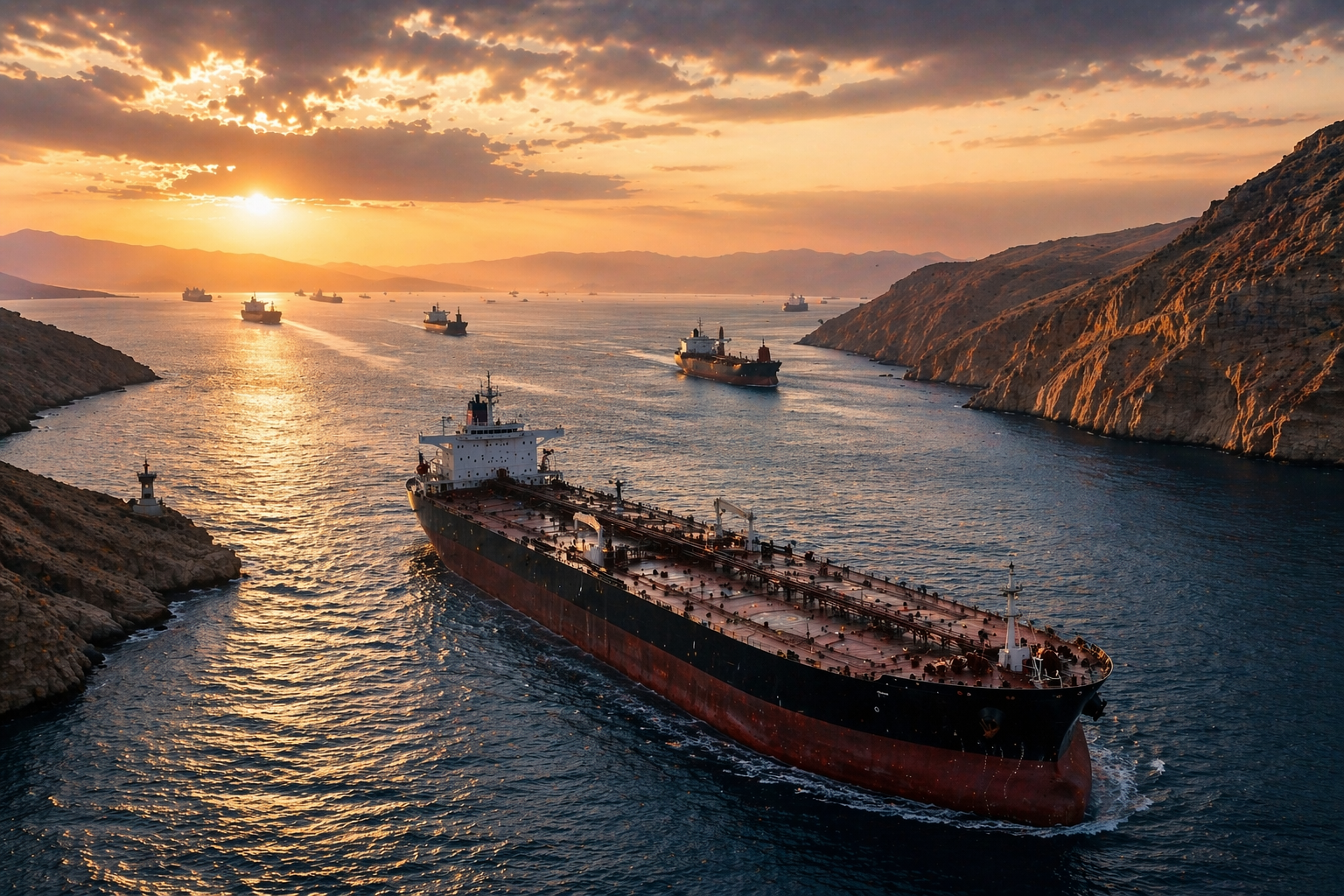
The oil market has shifted sharply as renewed tension around the Strait of Hormuz begins to reshape expectations for global supply. The region remains one of the most critical energy corridors in the world, and any disruption, or even the threat of disruption, carries immediate consequences for pricing, sentiment, and market positioning.
Recent developments have increased concern over the stability of shipping routes through the area. Traders are no longer treating the situation as a distant risk. Instead, it is being priced directly into the market as a potential constraint on supply. When a key transit point comes under pressure, the impact is not limited to the physical flow of oil. It also affects insurance costs, freight rates, and the willingness of companies to move cargo through the region.
This shift is important because oil markets tend to react quickly to geopolitical signals. Even before actual supply is reduced, prices can move as participants adjust for worst case scenarios. The current environment reflects that behavior, with risk premium returning as a dominant driver. Markets are effectively pricing in the possibility that supply could tighten further if tensions escalate.
Another factor supporting this move is the structure of global demand. Oil consumption remains sensitive to both economic activity and transportation needs, and disruptions in supply routes can create imbalances that ripple across regions. When supply becomes less predictable, buyers often move to secure access early, which reinforces upward pressure and adds momentum to price moves.
The situation also feeds into broader inflation expectations. Higher energy costs tend to influence transportation, manufacturing, and consumer prices, which in turn affects central bank outlooks. As oil markets reprice higher, investors begin to reassess how long inflation pressures could persist and what that means for monetary policy. This connection makes oil not just a commodity story, but a macroeconomic one.
At the same time, volatility is increasing. Markets are reacting to headlines and developments in real time, which creates a more unstable trading environment. Participants are adjusting positions more frequently, and liquidity can become uneven as uncertainty grows. This kind of environment often amplifies price swings and makes short term direction harder to predict.
Despite the upward repricing, the outlook remains highly dependent on how the geopolitical situation evolves. Any sign of de escalation could remove the current risk premium just as quickly as it appeared. On the other hand, further disruption would likely intensify the current trend and push markets into a more defensive stance.
Overall, the oil market is once again being driven by geopolitical risk rather than purely economic fundamentals. The renewed focus on Hormuz highlights how critical supply routes remain to global stability, and how quickly market expectations can shift when those routes come under threat.
Terms in this article
Price-to-earnings ratio (P/E)
Share price divided by earnings per share.
Inflation
The rate at which the general level of prices rises over time, reducing what money can buy.
Central bank
The institution that sets a country's or region's monetary policy, issues its currency and oversees the banking system — for example the Federal Reserve, European Central Bank, Bank of England and Bank of Japan.
Volatility
The size and speed of price changes, commonly measured as the annualised standard deviation of returns.
Liquidity
How easily an asset can be bought or sold in size without moving its price much.
Ask about this story
Questions are answered only from this article and the sources it cites.
MarketAlleys provides news and analysis for information only; it is not investment advice or a recommendation to buy or sell any security. Markets involve risk. Risk disclaimer.
Was this useful?
Report an issue with this article
Get the Daily Brief
What moved, why, and what matters next — every morning.
Related coverage

Platinum After The Industrial Metals Bid And The Crude Fade
Platinum is not trading a slogan about jewelry. It is trading a metal that finally caught a bid while crude printed a sixth down session. Copper already had its tightness story. Gold and silver already had their yield stories.
MarketAlleys Desk · · 2 min read

Brent After The Yanbu Loadings Halt And Cancelled European Cargoes
Brent is not trading a slogan about the Gulf. It is trading a Red Sea hub that stopped lifting barrels and a set of European cargoes that Riyadh cancelled.
MarketAlleys Desk · · 2 min read

Iron Ore After China Industrial Production And Retail Sales Prints
Iron ore is not trading a slogan about China growth. It is trading two official prints that landed into a Federal Reserve week. Industrial production and retail sales are the demand tape for the steel chain.
MarketAlleys Desk · · 2 min read
US Diesel After The Saudi East West Pipeline Shutdown And A Record Pump Print
Diesel is not trading as a quieter cousin of crude. It is trading the product that households and truckers actually buy. A Saudi shutdown of the East West line took an alternative route off the map after attacks.
MarketAlleys Desk · · 2 min read