Precious metals rally reflects sustained safe haven demand amid global uncertainty
MarketAlleys Desk
Published · 2 min read
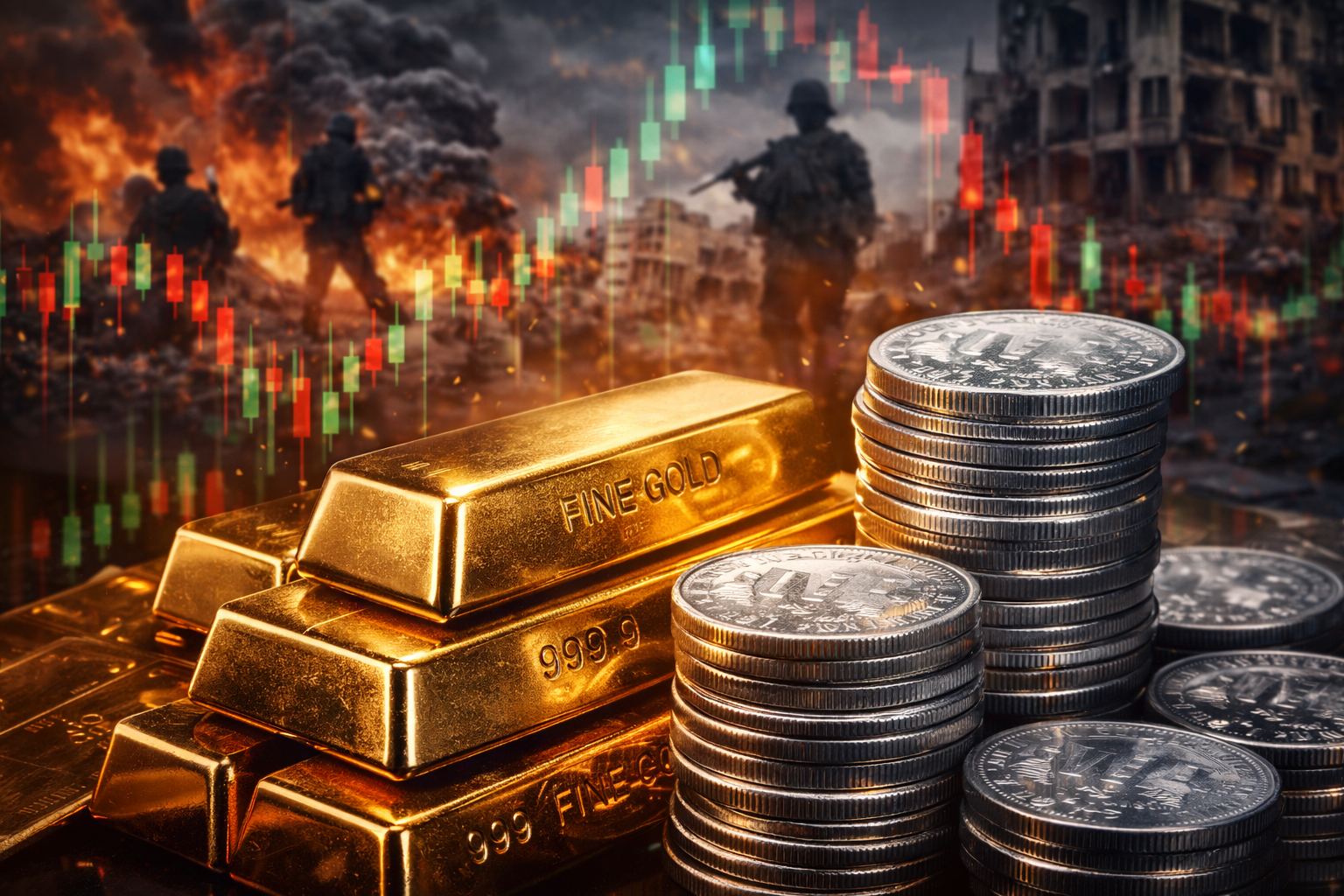
Precious metals continue to attract strong investor interest as global uncertainty reinforces demand for assets perceived as stores of value. Gold and silver have both benefited from a combination of geopolitical tension, uneven economic momentum, and shifting expectations around monetary policy. Rather than a short term reaction, the current move reflects deeper structural demand that has been building over time.
One of the most important drivers is persistent geopolitical risk. Ongoing conflicts, trade disputes, and political instability across major regions have increased caution among investors. In uncertain environments, precious metals tend to perform well because they are not directly tied to the performance of any single economy or financial system. This independence makes them attractive when confidence in traditional assets weakens.
Central bank behavior has also played a significant role. Many monetary authorities continue to favor reserve diversification as a way to reduce exposure to currency and sovereign risk. Gold remains a preferred asset in this process due to its liquidity, historical credibility, and lack of counterparty risk. This steady institutional demand provides a durable foundation for the market and reduces vulnerability to sharp corrections driven by speculative flows.
Another supporting factor is the broader macro environment. While inflation pressures have moderated in some regions, uncertainty around growth remains elevated. Investors are increasingly aware that economic conditions can shift quickly, particularly when policy decisions are constrained by political considerations. In this context, precious metals serve as a hedge not only against inflation but also against policy missteps and financial instability.
Silver has also gained attention, benefiting from both its safe haven characteristics and its industrial applications. Demand linked to technology, energy transition projects, and manufacturing adds an additional layer of support. This dual role makes silver more sensitive to changes in economic expectations, but it also allows it to outperform when both defensive and cyclical demand align.
Market positioning suggests that investors are not chasing momentum blindly. Instead, allocation to precious metals appears deliberate and strategic. Portfolio managers are increasingly treating gold and silver as long term components of diversified portfolios rather than tactical trades. This shift in perception contributes to more stable demand and less dependence on short term sentiment.
Overall, the precious metals rally reflects a market that remains cautious and forward looking. Investors are responding to a world where risk is harder to quantify and confidence is more fragile. As long as geopolitical uncertainty persists and policy clarity remains limited, precious metals are likely to retain their appeal as reliable hedges within broader investment strategies.
Terms in this article
Safe haven
An asset expected to hold or gain value during market stress.
Gold (XAU)
A precious metal held as a store of value, a hedge against currency debasement and a safe haven, as well as used in jewellery and industry.
Central bank
The institution that sets a country's or region's monetary policy, issues its currency and oversees the banking system — for example the Federal Reserve, European Central Bank, Bank of England and Bank of Japan.
Diversification
Spreading capital across assets whose prices do not move in lockstep, so that a loss in one holding has less effect on the whole portfolio.
Liquidity
How easily an asset can be bought or sold in size without moving its price much.
Ask about this story
Questions are answered only from this article and the sources it cites.
MarketAlleys provides news and analysis for information only; it is not investment advice or a recommendation to buy or sell any security. Markets involve risk. Risk disclaimer.
Was this useful?
Report an issue with this article
Get the Daily Brief
What moved, why, and what matters next — every morning.
Related coverage

Platinum After The Industrial Metals Bid And The Crude Fade
Platinum is not trading a slogan about jewelry. It is trading a metal that finally caught a bid while crude printed a sixth down session. Copper already had its tightness story. Gold and silver already had their yield stories.
MarketAlleys Desk · · 2 min read

Brent After The Yanbu Loadings Halt And Cancelled European Cargoes
Brent is not trading a slogan about the Gulf. It is trading a Red Sea hub that stopped lifting barrels and a set of European cargoes that Riyadh cancelled.
MarketAlleys Desk · · 2 min read

Iron Ore After China Industrial Production And Retail Sales Prints
Iron ore is not trading a slogan about China growth. It is trading two official prints that landed into a Federal Reserve week. Industrial production and retail sales are the demand tape for the steel chain.
MarketAlleys Desk · · 2 min read

US Diesel After The Saudi East West Pipeline Shutdown And A Record Pump Print
Diesel is not trading as a quieter cousin of crude. It is trading the product that households and truckers actually buy. A Saudi shutdown of the East West line took an alternative route off the map after attacks.
MarketAlleys Desk · · 2 min read