S&P 500 and Nasdaq outlook: AI rally strength versus valuation and rate risks
MarketAlleys Desk
Published · 2 min read
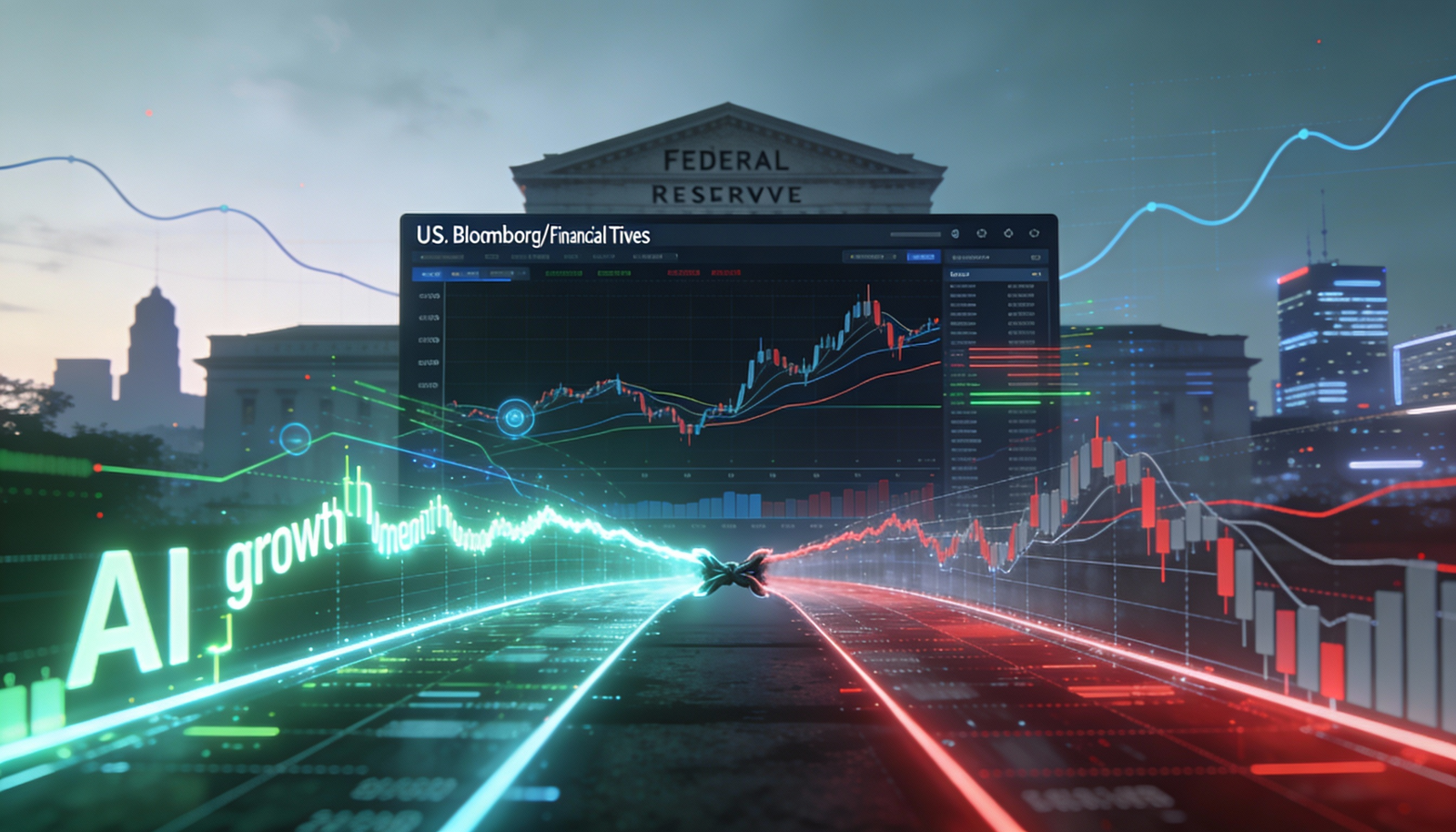
US equity indices are entering the new year with a market narrative dominated by one word: AI. The S&P 500 and Nasdaq remain heavily influenced by technology leadership, with investors still positioning around expectations that artificial intelligence will drive productivity gains, capital spending, and corporate earnings growth. However, while the long term AI theme remains intact, the short term outlook is becoming more complex due to valuation sensitivity, policy uncertainty, and shifting interest rate expectations.
The bullish case for the S&P 500 is straightforward. Earnings are expected to remain resilient, and many strategists anticipate further upside supported by solid corporate profitability and continued demand for large cap US equities. Market outlooks from major institutions point to a positive year ahead, with investors still willing to pay a premium for reliable growth exposure and AI linked business models.
The Nasdaq, however, carries a higher concentration of AI winners and high growth names, which creates greater upside potential but also increases vulnerability to disappointment. This is where the primary risk emerges: markets are no longer pricing AI as a future opportunity, but as an expectation. When expectations rise faster than actual monetization results, the index becomes exposed to earnings driven volatility. Some analysts have flagged that correction risk is realistic if profit growth does not keep pace with the market’s assumptions.
Interest rates remain the second major driver. Investors are watching whether the Federal Reserve remains restrictive longer than expected. Recent polling indicates the Fed may stay on hold in the near term, as inflation is still persistent and growth has held up better than earlier forecasts. A higher for longer path tends to pressure richly valued technology stocks because discounted cash flow valuations become more sensitive when real yields remain elevated.
At the same time, the outlook is not purely negative. If growth moderates and inflation cools without triggering recession, markets could interpret that as a soft landing environment, one that supports equities through stable earnings and improving financial conditions. In that scenario, the S&P 500 can benefit from broad participation beyond mega caps, while the Nasdaq can maintain leadership if AI spending continues to translate into stronger revenue visibility.
Overall, the outlook for US indices is balanced between structural optimism and tactical caution. AI remains the long term engine of market leadership, but valuations and rates will determine how smooth or volatile the next phase of the rally becomes.
Terms in this article
S&P 500
A float-adjusted, market-cap-weighted index of about 500 leading US companies selected by a committee at S&P Dow Jones Indices.
Price-to-earnings ratio (P/E)
Share price divided by earnings per share.
Volatility
The size and speed of price changes, commonly measured as the annualised standard deviation of returns.
Federal Reserve (Fed)
The US central bank, with a dual mandate of maximum employment and stable prices.
Inflation
The rate at which the general level of prices rises over time, reducing what money can buy.
Ask about this story
Questions are answered only from this article and the sources it cites.
MarketAlleys provides news and analysis for information only; it is not investment advice or a recommendation to buy or sell any security. Markets involve risk. Risk disclaimer.
Was this useful?
Report an issue with this article
Get the Daily Brief
What moved, why, and what matters next — every morning.
Related coverage
CNBC flags six market themes as earnings season and inflation reports approach
CNBC reported Oct 11 that earnings season ramps up this week with four Club holdings set to report and two main inflation reports also out.
MarketAlleys Research Desk · · 3 min read

S&P 500 Into The Warsh Statement And The First Dots Of This Cycle
The S&P 500 is not trading a slogan about American stocks. It is trading the broad listed tape into a statement and a set of projections that will tell you whether this committee is done after one move.
MarketAlleys Desk · · 2 min read

Nasdaq 100 After The Monday Chip Rout And The AI Slowdown Warning
The Nasdaq 100 is not trading a slogan about technology. It is trading an index that just took a chip led hit after industry voices called for a slower build to contain risk to humanity.
MarketAlleys Desk · · 2 min read

Philadelphia Semiconductor Index After A Session That Rewarded Chips And Sold The Rest Of Nasdaq
The Philadelphia Semiconductor Index did not trade the same tape as the Nasdaq Composite. That is the index story. Oil and a firmer long end sold the broad growth book. A handful of chip names still cleared.
MarketAlleys Desk · · 2 min read