Silver Market Sentiment Shaped by Industrial Demand and Energy Transition Policies
MarketAlleys Desk
Published · 2 min read
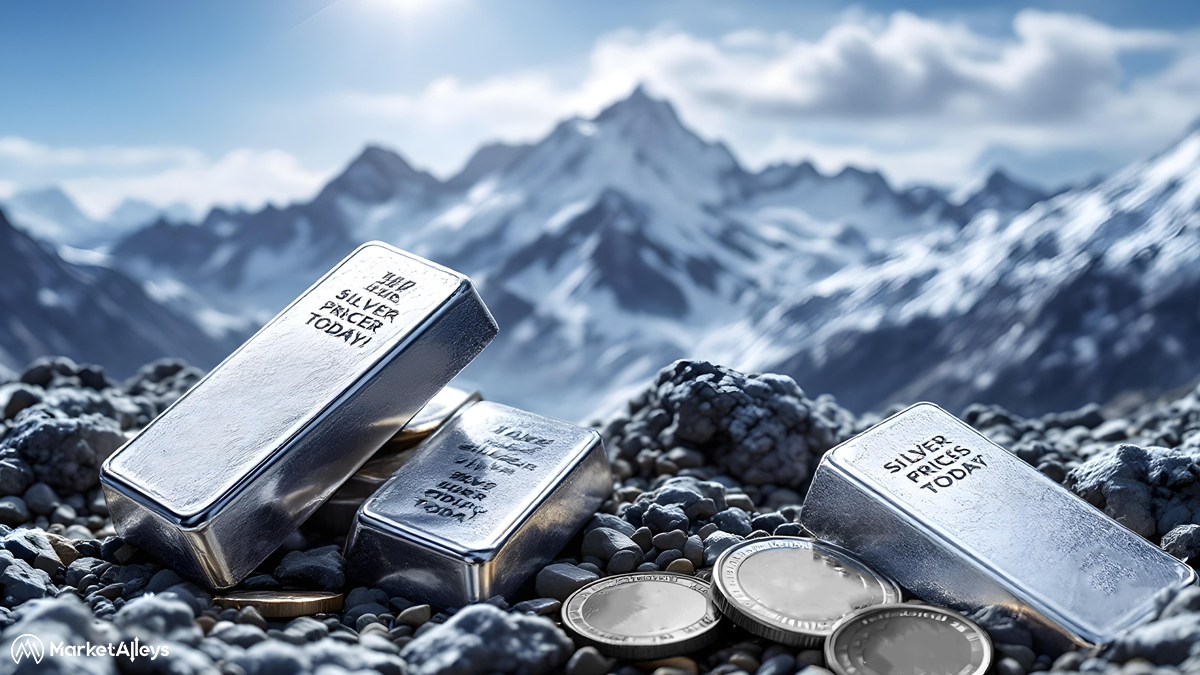
The market for silver has taken on a unique and increasingly influential role in the global commodities landscape, as its price action and fundamental drivers reflect both industrial demand growth and broader trends tied to the energy transition. Unlike some metals that serve primarily as financial hedges, silver’s industrial footprint especially in clean energy and advanced technology applications has drawn heightened attention from investors and manufacturers alike.
One of the key forces behind silver’s current prominence is its indispensable role in industrial production. Silver is widely used in electronics, solar energy equipment, and automotive components due to its exceptional electrical and thermal conductivity. Industrial demand alone now accounts for roughly half of total global consumption, underscoring its transformation from a traditional precious metal into a core input for modern manufacturing. This shift has substantial implications for the commodity’s underlying dynamics because industrial silver is often consumed permanently in finished products, meaning it does not return to market as readily as investment metal.
The expansion of renewable energy systems, particularly solar photovoltaic installations, has added another layer of structural demand for silver. Photovoltaic cells rely on silver for conductive components, and as countries and corporations pursue ambitious clean energy targets, this sector’s silver requirements are expected to rise. Analysts project that solar energy will continue to absorb a growing share of silver output even as technological improvements reduce the amount used per unit. Meanwhile, electrification in transportation and infrastructure, including electric vehicles and charging stations, further elevates material consumption.
This widening industrial base helps explain why silver recently reached record price levels and outperformed traditional precious metals in percentage terms over parts of the year. Continued interest from both manufacturers and investors has lifted silver’s profile, making it a more complex and multifaceted commodity than in past cycles. These developments are reinforced by structural supply constraints, as global mining output struggles to keep pace with rising consumption and most silver production remains tied to byproducts of other metal extractions.
Policy contexts have also shaped sentiment. Silver’s designation as a critical mineral in key markets highlights its strategic value in energy transition frameworks around the world. Government efforts to bolster renewable capacity and advanced technology sectors tend to support long-term industrial demand forecasts even amid periods of short-term volatility. In contrast to metals whose prices may be driven primarily by investor speculation or safe-haven demand, silver’s industrial demand provides a more tangible and enduring foundation for sentiment.
However, despite the structural tailwinds, there are nuanced risks in the silver market. High prices may lead to substitution efforts in certain industrial processes or temporary moderation in demand growth when economic conditions soften. Analysts emphasize that while the long-term trajectory remains linked to energy transition and broader electrification trends, cyclical pressures can still influence performance in the near term.
Overall, silver’s evolving role reflects a broader transformation in commodity markets where industrial demand and technological adoption play increasingly influential roles. Its integration into energy transition technologies and ongoing relevance in manufacturing applications have reshaped how investors and industries alike assess its trajectory. As these trends continue, silver’s position at the intersection of demand growth and supply limitations will remain a key theme in commodities discourse.
Terms in this article
Price-to-earnings ratio (P/E)
Share price divided by earnings per share.
Volatility
The size and speed of price changes, commonly measured as the annualised standard deviation of returns.
Safe haven
An asset expected to hold or gain value during market stress.
Ask about this story
Questions are answered only from this article and the sources it cites.
MarketAlleys provides news and analysis for information only; it is not investment advice or a recommendation to buy or sell any security. Markets involve risk. Risk disclaimer.
Was this useful?
Report an issue with this article
Get the Daily Brief
What moved, why, and what matters next — every morning.
Related coverage
Week Ahead, Monday October 12: 19 events, 11 high-importance releases
This week features 19 upcoming events, including 15 earnings reports and 4 macro releases; 11 items are flagged high importance, led by major bank earnings and the US Consumer Price Index.
MarketAlleys Research Desk · · 6 min read
MarketAlleys Daily Brief, Sunday, October 11, 2026: Weekend market snapshot
Crypto traded mixed over the rolling 24 hours while major US equity ETFs rose from the prior close; the week ahead features bank earnings before the open and the US Consumer Price Index at 12:30 UTC on Oct 14.
MarketAlleys Research Desk · · 6 min read
Closing Tape, Friday October 9, 2026: US ETFs finish higher
US ETFs rose from the prior close while gold and silver advanced; Amazon led gainers and Apple lagged. Treasury yields were lower as of Thu Oct 8; Bitcoin rose over 24 hours.
MarketAlleys Research Desk · · 5 min read
US Premarket Brief, Thursday October 8: Asian and European ETFs fell; bitcoin down 1.28%
Asian and European ETFs were lower on Oct 7; Bitcoin fell 1.28% over 24 hours as of Oct 8, 12:30 UTC. US markets trade today and the Department of Labor's weekly jobless claims is scheduled.
MarketAlleys Research Desk · · 4 min read