Swiss Franc and Canadian Dollar Exchange Rate Outlook Amid Commodity Market Fluctuations
MarketAlleys Desk
Published · 2 min read
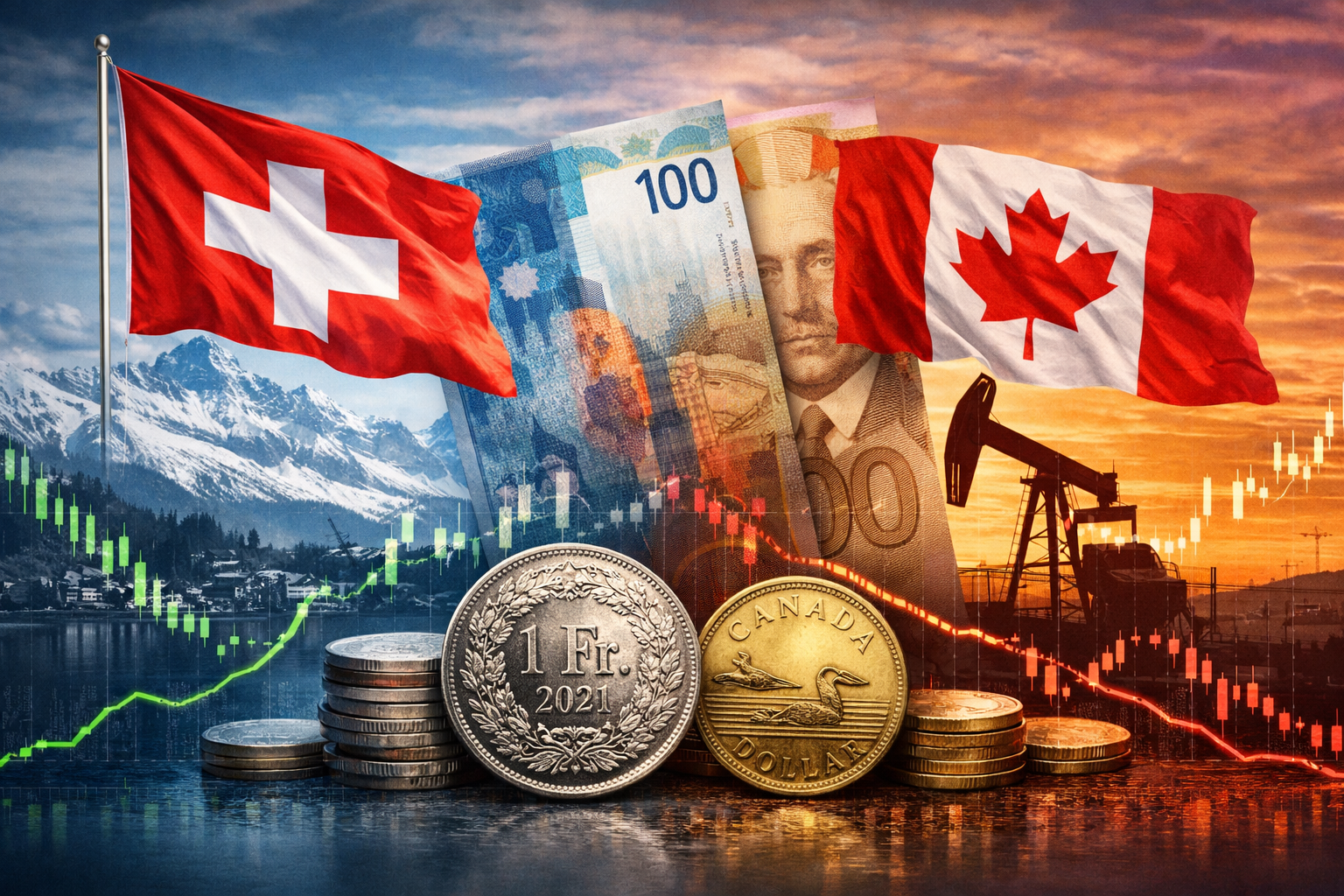
The exchange rate between the Swiss Franc and the Canadian Dollar continues to reflect the contrasting economic structures of Switzerland and Canada. While both currencies are considered stable within the broader foreign exchange market, their drivers differ significantly. Switzerland is widely viewed as a financial safe haven, whereas Canada remains closely linked to global commodity demand, particularly energy and raw materials.
Recent developments in commodity markets have played a central role in shaping the Canadian Dollar. Canada’s economy is heavily influenced by crude oil exports and broader resource production. When global energy demand strengthens and commodity prices remain firm, the Canadian Dollar often benefits from improved trade expectations and stronger capital inflows. Conversely, when commodity markets face uncertainty due to slowing global growth or shifting demand patterns, the currency can come under pressure.
The Swiss Franc, in contrast, is more sensitive to shifts in global risk sentiment and monetary policy stability. Switzerland maintains a reputation for financial discipline, low inflation pressures, and a resilient banking system. During periods of geopolitical tension or financial market volatility, investors frequently seek exposure to the Swiss Franc as a defensive allocation. This dynamic can create upward pressure on the currency even when domestic economic growth remains moderate.
Monetary policy divergence between the Swiss National Bank and the Bank of Canada is another important factor influencing the pair. If the Bank of Canada maintains a firm policy stance to address inflation or support economic momentum, the Canadian Dollar may attract yield seeking capital. On the other hand, if the Swiss National Bank signals policy normalization or shifts away from historically accommodative conditions, the Swiss Franc can strengthen accordingly. Market participants closely monitor policy guidance, inflation trends, and economic activity indicators from both countries to assess relative currency positioning.
Global trade flows and risk appetite also contribute to the broader outlook. The Canadian Dollar tends to align with cyclical growth expectations, benefiting when investors anticipate stronger industrial demand and global expansion. The Swiss Franc often moves inversely, gaining during cautious market conditions. This relationship can lead to notable volatility in the exchange rate when commodity sentiment and risk perception shift simultaneously.
Looking ahead, the trajectory of commodity markets, global growth expectations, and central bank communication will remain decisive. If energy demand stabilizes and global economic conditions improve, the Canadian Dollar may find support against the Swiss Franc. However, persistent uncertainty or renewed financial stress could favor the defensive characteristics of the Swiss currency. Traders and investors will continue to assess these cross currents carefully as the foreign exchange market adjusts to evolving macroeconomic signals.
Terms in this article
Exchange rate
The price of one currency in terms of another.
Safe haven
An asset expected to hold or gain value during market stress.
Price-to-earnings ratio (P/E)
Share price divided by earnings per share.
Inflation
The rate at which the general level of prices rises over time, reducing what money can buy.
Volatility
The size and speed of price changes, commonly measured as the annualised standard deviation of returns.
Ask about this story
Questions are answered only from this article and the sources it cites.
MarketAlleys provides news and analysis for information only; it is not investment advice or a recommendation to buy or sell any security. Markets involve risk. Risk disclaimer.
Was this useful?
Report an issue with this article
Get the Daily Brief
What moved, why, and what matters next — every morning.
Related coverage

USD/KRW After The Won’s Best Session In A Month And A Firmer Dollar
USD/KRW is not trading a slogan about Asia. It is trading the won after its best session in a month against a dollar that is still firm into a Federal Reserve path and into a Washington meeting with Beijing.
MarketAlleys Desk · · 2 min read

GBP/USD After The United Kingdom CPI Print Into The Bank Of England Decision
GBP/USD is not trading a slogan about Britain. It is trading a consumer price print that landed one day before the Bank of England speaks and on the same day the Federal Reserve speaks. The pair is the residual of those two paths.
MarketAlleys Desk · · 2 min read

USD/JPY Into A Same Week Fed Hike And A Bank Of Japan Hike
USD/JPY is not trading a slogan about the yen. It is trading two policy meetings in one week. The Federal Reserve is priced to lean tighter after hotter core prices and a fuel shock.
MarketAlleys Desk · · 2 min read

USD/CAD After Canadian CPI And A Repriced Bank Of Canada Hike Path
USD/CAD is not trading a slogan about North America. It is trading a same week inflation print in Canada against a Federal Reserve meeting that the market already treats as a hike. Canadian consumer prices land first.
MarketAlleys Desk · · 2 min read