Trump Vows Unilateral Tariff Rates Amid Escalating Trade Strategy
Former President Donald Trump has reignited global trade tensions with his latest announcement promising to set unilateral tariff rates within weeks.
MarketAlleys Desk
Published · 2 min read
Introduction
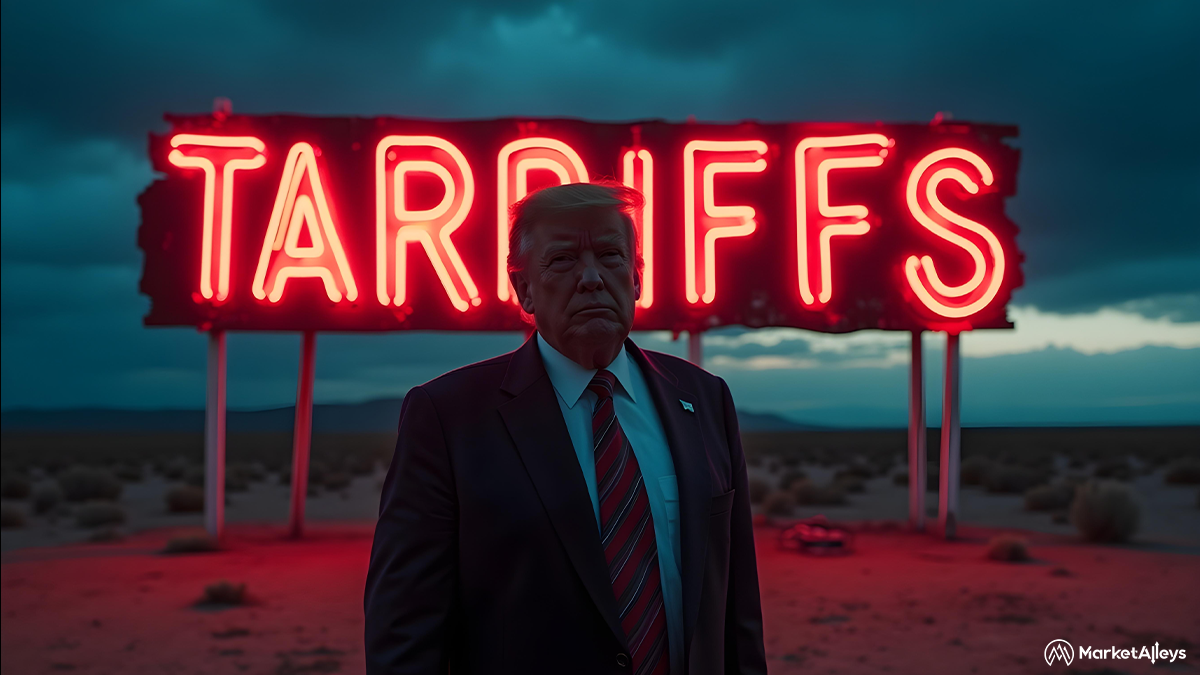
Former President Donald Trump has reignited global trade tensions with his latest announcement promising to set unilateral tariff rates within weeks. This move marks a significant shift in trade policy direction and is expected to send ripple effects across markets, industries, and diplomatic relations. As Trump inches closer to formalizing his economic strategy, both allies and competitors brace for the implications.
Key Takeaways
- Trump plans to establish unilateral tariff rates without multilateral agreements.
- The proposed tariffs target both adversaries and trade partners.
- Economists warn of potential inflationary effects and global trade instability.
- The move could impact supply chains and increase consumer prices in the US.
Trump Pushes for Aggressive Tariff Plan
Trump has reiterated his intent to impose a sweeping set of tariffs aimed at reshaping America’s trade posture. Declaring that the U.S. must act independently to protect its economic interests, he claimed that setting tariff rates unilaterally would enable faster and more decisive action.
According to Trump, these tariffs would cover a wide range of goods, particularly targeting countries with large trade surpluses with the United States. This aggressive stance echoes his earlier trade war with China and suggests a return to protectionist policies if he regains power.
Implications for Global Markets and Trade
Trump’s unilateral approach has raised alarm bells among economists and international trade experts. They argue that bypassing multilateral frameworks could strain global supply chains and provoke retaliatory measures from trade partners.
For exporters to the U.S., such as China, Mexico, and Germany, these new tariffs could mean a significant drop in demand. For American consumers, the direct result might be increased prices on everyday goods—from electronics and automobiles to food and clothing.
Global markets responded cautiously to the announcement. Analysts note that while the policy remains speculative for now, the mere anticipation of trade barriers could dampen investor confidence and slow economic momentum, especially in export-reliant countries.
Domestic Impact and Political Strategy
Domestically, Trump’s strategy may play well with a voter base concerned about manufacturing jobs and economic nationalism. However, businesses and retailers worry about the burden of rising input costs.
U.S. manufacturers that rely on global supply chains could face increased costs and logistical challenges, potentially forcing them to either absorb losses or pass them on to consumers. At the same time, inflationary pressures could complicate the Federal Reserve’s efforts to manage interest rates and economic stability.
Conclusion
Trump’s declaration to unilaterally set tariffs signals a bold, high-stakes maneuver in trade policy that could reshape the global economic landscape. While aimed at protecting American industries and jobs, the plan risks retaliation, inflation, and international backlash. As the world watches closely, markets remain on edge, waiting to see if rhetoric turns into reality in the coming weeks.
Terms in this article
Tariff
A tax on imported goods, paid by the importer.
Price-to-earnings ratio (P/E)
Share price divided by earnings per share.
Federal Reserve (Fed)
The US central bank, with a dual mandate of maximum employment and stable prices.
Inflation
The rate at which the general level of prices rises over time, reducing what money can buy.
Ask about this story
Questions are answered only from this article and the sources it cites.
MarketAlleys provides news and analysis for information only; it is not investment advice or a recommendation to buy or sell any security. Markets involve risk. Risk disclaimer.
Was this useful?
Report an issue with this article
Get the Daily Brief
What moved, why, and what matters next — every morning.
Related coverage
IMF finds demand for tokenized stocks but calls market volatile and illiquid
CoinDesk reported Oct 11 that the IMF found demand for tokenized stocks and said the market remains volatile and illiquid; Yahoo also reported the item.
MarketAlleys Research Desk · · 3 min read
Week Ahead, Monday October 12: 19 events, 11 high-importance releases
This week features 19 upcoming events, including 15 earnings reports and 4 macro releases; 11 items are flagged high importance, led by major bank earnings and the US Consumer Price Index.
MarketAlleys Research Desk · · 6 min read

Trump Xi Meeting In Washington On A Trade Truce And AI Cooperation
The political tape this week is not another Iran post. It is a sitting president hosting the Chinese leader in Washington while markets already priced a quieter crude tape and a firmer dollar.
MarketAlleys Desk · · 2 min read

Warsh Hike Path Versus A White House That Does Not Want Tightening
The political tape into this Federal Reserve meeting is not a speech about oil. It is a collision between a chair who is boxed into a hike and a White House that has already shown it will not like the vote.
MarketAlleys Desk · · 2 min read