Why Latin American Currencies Are Strengthening While Global Markets Remain Uncertain
MarketAlleys Desk
Published · 2 min read

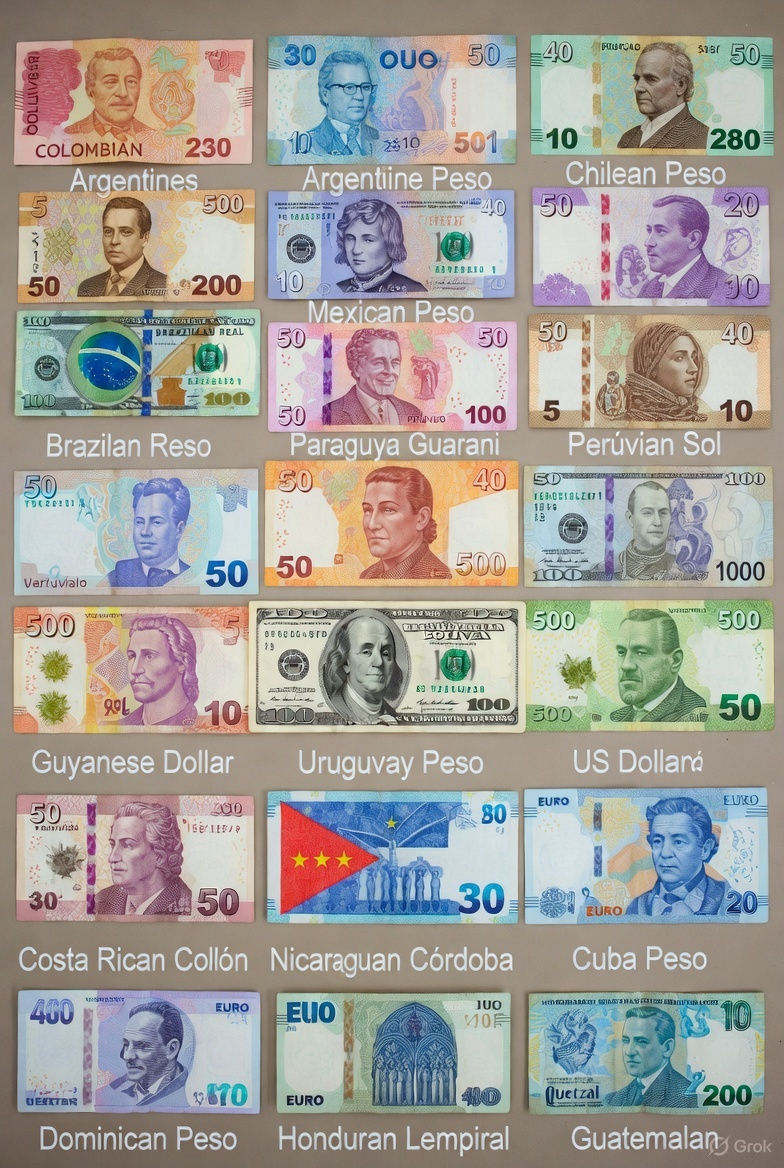
Foreign exchange markets have spent most of the year responding to shifting growth expectations, interest rate changes and political surprises. Among the most notable developments is the strength of several Latin American currencies. Even as global markets face uncertainty, many currencies in the region have gained momentum. This has caught the attention of investors who traditionally viewed emerging market currencies with caution.
The improvement begins with the return of investor confidence. Political changes across parts of Latin America have created a more stable environment for foreign investment. Governments that once signaled unpredictable economic policies are now working more closely with international institutions and are strengthening relationships with the United States. These developments matter deeply in foreign exchange markets because they influence how much risk investors are willing to accept when buying local currency assets.
Interest rate policy has also played a major role. Over the past two years several Latin American central banks acted earlier and more aggressively than their counterparts in developed economies to control inflation. As a result their benchmark rates remain elevated compared to those of the United States and Europe. High interest rates create attractive carry trade opportunities. Investors who borrow in low yielding currencies and invest in high yielding ones can earn meaningful returns. This strategy has supported currencies such as the Brazilian real, the Mexican peso and the Colombian peso.
Another factor that helps these currencies is the relative strength of external accounts. Many countries in the region benefit from commodity exports. Even though some commodity prices have softened, revenues from energy, minerals and agricultural goods still provide important support for national budgets and trade balances. Stable external accounts reduce pressure on foreign exchange markets and give investors more confidence that currencies will remain resilient during periods of global volatility.
At the same time the United States dollar has shown signs of softening after an extended period of strength. Investors expect more predictable monetary policy from the United States and believe the Federal Reserve may eventually move toward a more neutral stance. When the dollar loses momentum, capital often flows into higher yielding and more dynamic markets. This pattern has benefited Latin American currencies throughout the year.
However it is important to recognize that risks remain. A sharp decline in commodity prices could weaken export revenues and pressure currencies. Political shifts within the region can change investor sentiment quickly. Global liquidity also matters. If financial conditions tighten again, capital could retreat from emerging markets and move back to safer assets.
Even with these risks the present environment shows why foreign exchange markets have turned their attention to Latin America. Strong interest rate differentials, improved political signals and solid external accounts create a compelling mix for investors searching for yield and relative stability. As long as these conditions persist, Latin American currencies may continue to outperform many of their global peers.
Terms in this article
Central bank
The institution that sets a country's or region's monetary policy, issues its currency and oversees the banking system — for example the Federal Reserve, European Central Bank, Bank of England and Bank of Japan.
Inflation
The rate at which the general level of prices rises over time, reducing what money can buy.
Carry trade
Borrowing in a low-interest-rate currency and investing in a higher-yielding one to earn the interest-rate difference.
Price-to-earnings ratio (P/E)
Share price divided by earnings per share.
Volatility
The size and speed of price changes, commonly measured as the annualised standard deviation of returns.
Ask about this story
Questions are answered only from this article and the sources it cites.
MarketAlleys provides news and analysis for information only; it is not investment advice or a recommendation to buy or sell any security. Markets involve risk. Risk disclaimer.
Was this useful?
Report an issue with this article
Get the Daily Brief
What moved, why, and what matters next — every morning.
Related coverage

USD/KRW After The Won’s Best Session In A Month And A Firmer Dollar
USD/KRW is not trading a slogan about Asia. It is trading the won after its best session in a month against a dollar that is still firm into a Federal Reserve path and into a Washington meeting with Beijing.
MarketAlleys Desk · · 2 min read

GBP/USD After The United Kingdom CPI Print Into The Bank Of England Decision
GBP/USD is not trading a slogan about Britain. It is trading a consumer price print that landed one day before the Bank of England speaks and on the same day the Federal Reserve speaks. The pair is the residual of those two paths.
MarketAlleys Desk · · 2 min read

USD/JPY Into A Same Week Fed Hike And A Bank Of Japan Hike
USD/JPY is not trading a slogan about the yen. It is trading two policy meetings in one week. The Federal Reserve is priced to lean tighter after hotter core prices and a fuel shock.
MarketAlleys Desk · · 2 min read

USD/CAD After Canadian CPI And A Repriced Bank Of Canada Hike Path
USD/CAD is not trading a slogan about North America. It is trading a same week inflation print in Canada against a Federal Reserve meeting that the market already treats as a hike. Canadian consumer prices land first.
MarketAlleys Desk · · 2 min read