Geopolitics and trade tensions reshape commodity market dynamics
MarketAlleys Desk
Published · 2 min read
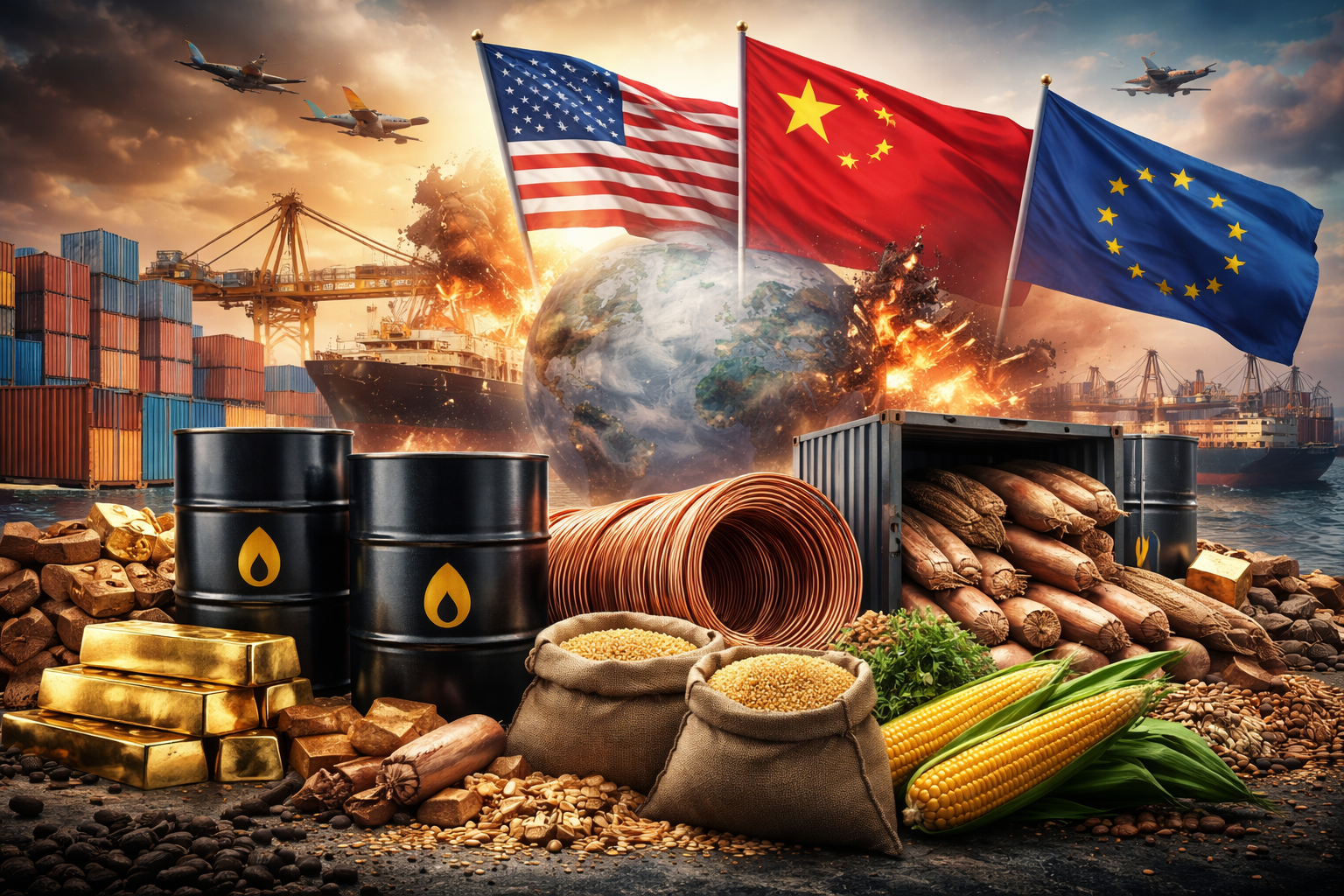
Commodity markets are being influenced less by traditional supply and demand balances and more by geopolitical developments and trade policy shifts. This change in market drivers is creating a period of uncertainty for producers, consumers, and investors who have long relied on fundamental indicators such as inventories, production levels, and seasonal consumption patterns to guide expectations. Today, political decisions, sanctions, tariffs, and strategic competition among major economies often overshadow purely economic considerations.
Geopolitical tensions have become an especially powerful force across energy, metals, and agricultural products. Policy actions affecting shipping routes, insurance access, and cross border payment systems can disrupt physical movement of goods even when production remains steady. When trade routes are questioned or transportation risks rise, markets tend to price in a higher level of precaution. This can tighten available supply to certain regions while leaving other areas with excess material, fragmenting what used to operate as more unified global markets.
Trade policy is also playing a larger role in shaping outcomes. Import restrictions, export controls, and changes in tariff regimes increasingly reflect strategic objectives rather than narrow economic logic. Governments are making decisions based on national security considerations, domestic industry support, or climate transition policy goals. These interventions alter where commodities can be sold, who can buy them, and at what cost. As a result, price formation now reflects not only the balance between producers and consumers but also the influence of political negotiation and diplomatic relationships.
Energy transition policies add another layer of complexity. Moves toward lower carbon economies have increased demand for certain metals and minerals used in batteries, renewable power infrastructure, and electric vehicles. At the same time, regulatory pressure on fossil fuels has changed investment incentives for oil, gas, and coal producers. Companies are being asked to meet existing energy demand while preparing for an entirely different future mix of consumption. This tension has made long term planning more difficult and has introduced volatility as markets react to new policy announcements.
Weather events and climate related risks further interact with geopolitical factors. Droughts, floods, and extreme temperatures affect crop yields and hydropower availability, but the ultimate market impact is often mediated by trade restrictions or emergency policy responses. When governments respond to shortages by imposing export limits or stockpiling, the effect on global availability can be greater than the initial weather shock itself. This feedback loop amplifies market swings and complicates forecasting.
Financial investors also play a significant role in this environment. As geopolitical headlines move markets, fund flows into and out of commodity related assets can accelerate price movements. Many investors now view commodities as a hedge against geopolitical risk or policy uncertainty rather than purely as reflections of physical consumption. This perspective can at times increase volatility even when physical conditions change only gradually.
Overall, commodity markets are being reshaped by geopolitics and trade tensions to a degree not seen in many years. Traditional supply and demand analysis remains important, but it is no longer sufficient on its own. Market participants must now assess political intentions, regulatory changes, and international relations alongside production data and consumption trends. This shift suggests that uncertainty is likely to remain elevated as long as policy and geopolitical considerations continue to dominate the global economic landscape.
Terms in this article
Tariff
A tax on imported goods, paid by the importer.
Price-to-earnings ratio (P/E)
Share price divided by earnings per share.
Volatility
The size and speed of price changes, commonly measured as the annualised standard deviation of returns.
Ask about this story
Questions are answered only from this article and the sources it cites.
MarketAlleys provides news and analysis for information only; it is not investment advice or a recommendation to buy or sell any security. Markets involve risk. Risk disclaimer.
Was this useful?
Report an issue with this article
Get the Daily Brief
What moved, why, and what matters next — every morning.
Related coverage

Platinum After The Industrial Metals Bid And The Crude Fade
Platinum is not trading a slogan about jewelry. It is trading a metal that finally caught a bid while crude printed a sixth down session. Copper already had its tightness story. Gold and silver already had their yield stories.
MarketAlleys Desk · · 2 min read

Brent After The Yanbu Loadings Halt And Cancelled European Cargoes
Brent is not trading a slogan about the Gulf. It is trading a Red Sea hub that stopped lifting barrels and a set of European cargoes that Riyadh cancelled.
MarketAlleys Desk · · 2 min read

Iron Ore After China Industrial Production And Retail Sales Prints
Iron ore is not trading a slogan about China growth. It is trading two official prints that landed into a Federal Reserve week. Industrial production and retail sales are the demand tape for the steel chain.
MarketAlleys Desk · · 2 min read

US Diesel After The Saudi East West Pipeline Shutdown And A Record Pump Print
Diesel is not trading as a quieter cousin of crude. It is trading the product that households and truckers actually buy. A Saudi shutdown of the East West line took an alternative route off the map after attacks.
MarketAlleys Desk · · 2 min read