How election year trade and war pressure across major economies is increasing political risk for global markets
MarketAlleys Desk
Published · 2 min read
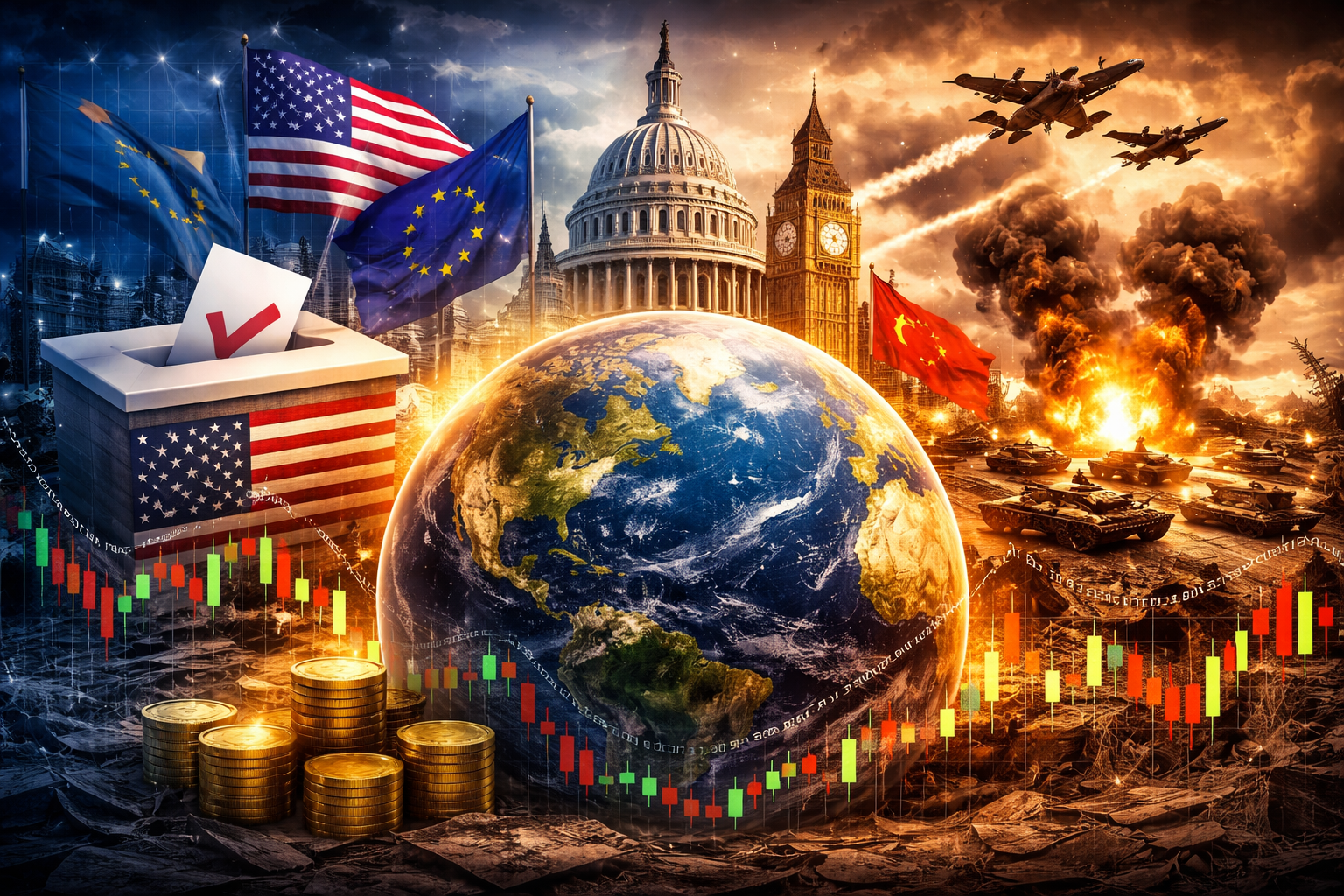
Global financial markets are facing rising political risk as election cycles across major economies intersect with ongoing geopolitical tensions. This combination is creating an environment of uncertainty that is influencing investor behavior, capital flows, and overall market sentiment.
Election periods often bring shifts in policy direction, particularly in areas such as trade, fiscal spending, and international relations. As governments position themselves ahead of key elections, policy rhetoric can become more assertive, especially when addressing economic challenges or geopolitical competition. This can lead to increased volatility, as markets attempt to anticipate potential changes before they are formally implemented.
At the same time, ongoing geopolitical tensions are amplifying these risks. Conflicts and strategic rivalries are affecting global trade routes, supply chains, and diplomatic relationships. When combined with election driven policy uncertainty, these factors create a complex landscape where investors must navigate both political and economic variables simultaneously.
Trade policy is a central point of focus. Governments may adopt more protectionist measures during election periods in an effort to support domestic industries and appeal to voters. This can include tariffs, subsidies, or restrictions on foreign investment. Such measures have direct implications for global markets, as they can disrupt established trade flows and alter competitive dynamics across industries.
Investor sentiment is becoming increasingly cautious in response to these developments. Market participants are placing greater emphasis on risk management, adjusting portfolios to account for potential policy shifts and geopolitical events. This includes diversification across regions and asset classes, as well as increased interest in assets that can perform under uncertain conditions.
Currency markets and equities are particularly sensitive to political risk. Changes in policy expectations can lead to rapid adjustments in capital flows, influencing exchange rates and stock market performance. This responsiveness highlights the growing importance of political developments as a driver of financial market behavior.
Looking ahead, the interaction between election cycles and geopolitical tensions is likely to remain a defining feature of the global market environment. As new information emerges, markets will continue to adjust, reflecting evolving expectations around policy direction and international relations. Political risk is no longer a secondary consideration but a central factor shaping investment decisions across the global financial system.
Terms in this article
Volatility
The size and speed of price changes, commonly measured as the annualised standard deviation of returns.
Tariff
A tax on imported goods, paid by the importer.
Diversification
Spreading capital across assets whose prices do not move in lockstep, so that a loss in one holding has less effect on the whole portfolio.
Exchange rate
The price of one currency in terms of another.
Ask about this story
Questions are answered only from this article and the sources it cites.
MarketAlleys provides news and analysis for information only; it is not investment advice or a recommendation to buy or sell any security. Markets involve risk. Risk disclaimer.
Was this useful?
Report an issue with this article
Get the Daily Brief
What moved, why, and what matters next — every morning.
Related coverage
IMF finds demand for tokenized stocks but calls market volatile and illiquid
CoinDesk reported Oct 11 that the IMF found demand for tokenized stocks and said the market remains volatile and illiquid; Yahoo also reported the item.
MarketAlleys Research Desk · · 3 min read
Week Ahead, Monday October 12: 19 events, 11 high-importance releases
This week features 19 upcoming events, including 15 earnings reports and 4 macro releases; 11 items are flagged high importance, led by major bank earnings and the US Consumer Price Index.
MarketAlleys Research Desk · · 6 min read

Trump Xi Meeting In Washington On A Trade Truce And AI Cooperation
The political tape this week is not another Iran post. It is a sitting president hosting the Chinese leader in Washington while markets already priced a quieter crude tape and a firmer dollar.
MarketAlleys Desk · · 2 min read

Warsh Hike Path Versus A White House That Does Not Want Tightening
The political tape into this Federal Reserve meeting is not a speech about oil. It is a collision between a chair who is boxed into a hike and a White House that has already shown it will not like the vote.
MarketAlleys Desk · · 2 min read