How USDC and USDT are reacting to stalled United States crypto legislation and growing scrutiny of stablecoin rules
MarketAlleys Desk
Published · 2 min read
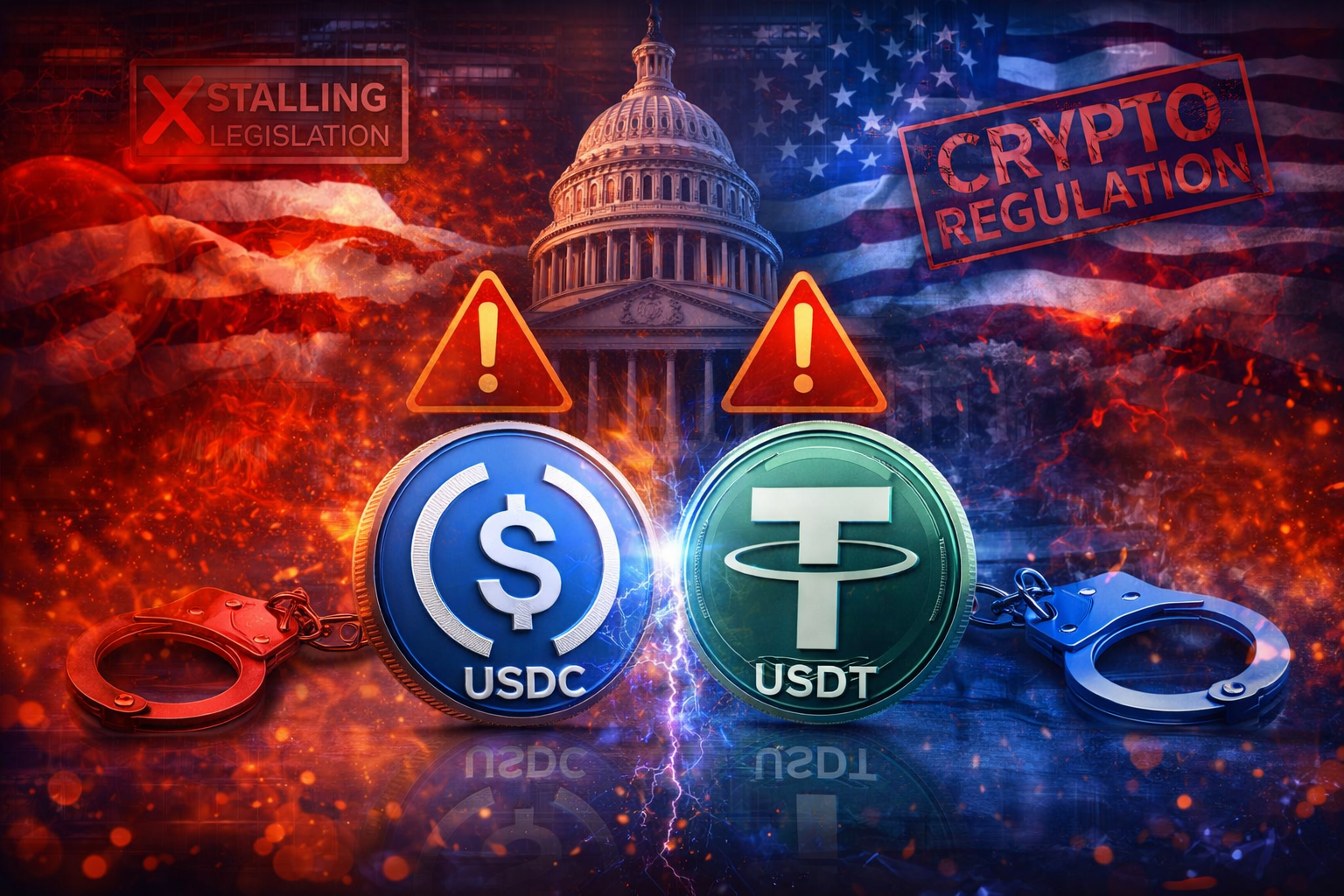
USDC and USDT are coming into sharper focus as regulatory uncertainty in the United States continues to shape sentiment across the cryptocurrency market. As two of the most widely used stablecoins, their behavior is increasingly influenced by developments in policy discussions and the evolving regulatory landscape.
Stablecoins occupy a unique position within the digital asset ecosystem. Designed to maintain a stable value, they are widely used for trading, liquidity management, and as a bridge between traditional finance and cryptocurrencies. This makes them particularly sensitive to regulatory changes, as any shift in policy can have immediate implications for their usage and adoption.
Recent delays in United States crypto legislation are contributing to uncertainty. While policymakers continue to debate frameworks for stablecoin oversight, the lack of clear direction is creating hesitation among market participants. Investors and institutions are closely monitoring these developments, as regulatory clarity is often seen as a key factor for broader adoption.
USDC is often viewed as more aligned with regulatory expectations due to its emphasis on transparency and compliance. This positioning may provide a degree of support as scrutiny increases, as market participants look for assets that are better prepared to operate within a structured framework. However, even with this advantage, uncertainty around future rules continues to influence sentiment.
USDT, by contrast, remains dominant in terms of market usage and liquidity. Its widespread adoption across exchanges and trading platforms makes it a central component of the crypto market. At the same time, it has historically faced greater scrutiny, and ongoing regulatory attention is adding to the complexity of its outlook. This dynamic creates a contrast between stability in usage and uncertainty in perception.
Market behavior reflects this divergence. Traders are balancing the need for liquidity with concerns about regulatory developments, leading to shifts in positioning between different stablecoins. These movements can influence broader market activity, as stablecoins play a key role in facilitating transactions and capital flows.
The interaction between regulation and market structure is becoming increasingly important. As policymakers work toward establishing clearer guidelines, the outcome will likely shape the future role of stablecoins within the financial system. Greater clarity could support growth and integration, while prolonged uncertainty may continue to limit confidence.
Looking ahead, USDC and USDT will remain closely tied to the evolution of United States crypto policy. As discussions progress, market participants will continue to adjust their expectations and strategies. In this environment, regulatory developments are not just a background factor but a central force influencing the direction of the stablecoin market.
Terms in this article
Stablecoin
A token designed to hold a steady value, usually one US dollar.
Liquidity
How easily an asset can be bought or sold in size without moving its price much.
Ask about this story
Questions are answered only from this article and the sources it cites.
MarketAlleys provides news and analysis for information only; it is not investment advice or a recommendation to buy or sell any security. Markets involve risk. Risk disclaimer.
Was this useful?
Report an issue with this article
Get the Daily Brief
What moved, why, and what matters next — every morning.
Related coverage
IMF sees demand for tokenized stocks but finds the market volatile and illiquid
CoinDesk reported that the IMF finds demand for tokenized stocks and describes the market as volatile and illiquid; Yahoo also reported the item.
MarketAlleys Research Desk · · 2 min read
Bitcoin at $83,885, rose 1.14% over 24 hours
CoinGecko shows Bitcoin at $83,885.00, rose 1.14% over 24 hours and with a five-session change of -4.54%; MarketAlleys Crypto desk reports RSI(14) 50.2 and a neutral trend status.
MarketAlleys Research Desk · · 2 min read
XRP at $1.4200 after a 1.13% 24-hour rise — MarketAlleys weekend crypto spotlight
XRP traded at $1.4200 and rose 1.13% over 24 hours while the five-session change was -8.22%; trend signals list a neutral stance with RSI(14) 43.3.
MarketAlleys Research Desk · · 2 min read
Ether posts modest 24-hour gain while five-session loss deepens
CoinGecko shows Ether rose over 24 hours and is down over five sessions; MarketAlleys trend signals list its status as neutral.
MarketAlleys Research Desk · · 2 min read