Trump’s Tariffs Could Backfire: Economists Warn of Ripple Effects on U.S. and Global Economy
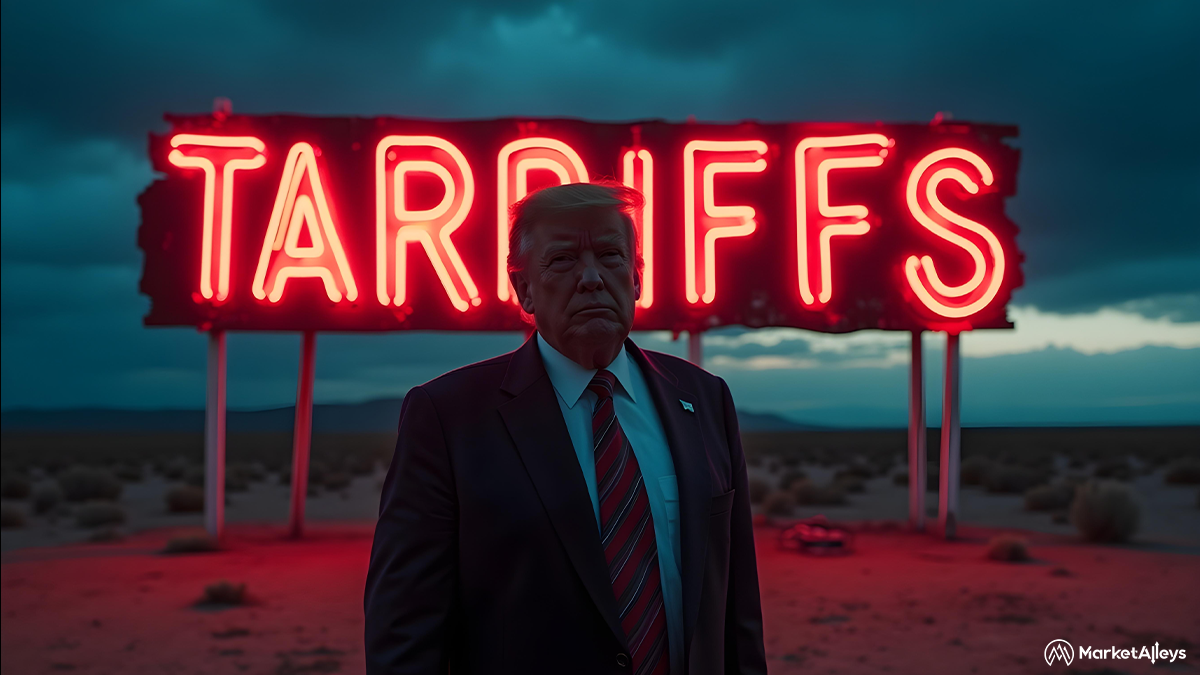
As the Trump administration pushes forward with a fresh wave of tariffs, economists and global trade experts are raising alarms over the unintended consequences such policies may bring.
MarketAlleys Desk
Published · 2 min read
Introduction
As the Trump administration pushes forward with a fresh wave of tariffs, economists and global trade experts are raising alarms over the unintended consequences such policies may bring. While tariffs are typically positioned as tools to protect domestic industries and rebalance trade, the long-term impact often tells a more complex story—one that may harm the very consumers and sectors they aim to protect.
Key Takeaways
- New U.S. tariffs may lead to higher prices for American consumers.
- Economists warn tariffs could disrupt global supply chains.
- Trade partners may retaliate, escalating tensions and risks.
- U.S. manufacturers could face increased input costs and lower competitiveness.
Tariffs Raise Consumer Prices and Weaken Purchasing Power
One of the most immediate effects of imposing tariffs is the rise in import prices. When tariffs are slapped on foreign goods, importers typically pass the extra costs onto American consumers. This results in higher prices for everything from electronics and clothing to raw materials and machinery. Economists argue this reduces household purchasing power and may drive inflation at a time when affordability is already a concern.
Supply Chains and U.S. Industry at Risk
The global economy is more interconnected than ever before. U.S. companies, including major manufacturers, rely on complex international supply chains for parts and raw materials. Tariffs disrupt these flows, leading to delays, higher production costs, and a decline in efficiency. Businesses may be forced to cut jobs or delay investment, dampening overall economic growth. Experts point out that instead of reviving American manufacturing, tariffs may make it more expensive and less globally competitive.
Retaliation and Global Trade Uncertainty
International backlash is also a major concern. Countries targeted by U.S. tariffs may respond with retaliatory measures, creating a cycle of trade barriers that hinders global commerce. The uncertainty surrounding future trade relationships can discourage investment and strain diplomatic ties. Analysts warn that prolonged trade disputes can erode investor confidence and weaken financial markets, especially in emerging economies closely tied to global trade dynamics.
Conclusion
While tariffs may seem like a powerful tool for economic leverage, their broader impact can be counterproductive. From higher costs for American families to disrupted supply chains and potential trade wars, the risks of a tariff-heavy strategy are significant. As economists continue to urge caution, the real test will be whether policymakers adjust their approach before the effects ripple further across the U.S. and global economy.
Terms in this article
Tariff
A tax on imported goods, paid by the importer.
Price-to-earnings ratio (P/E)
Share price divided by earnings per share.
Inflation
The rate at which the general level of prices rises over time, reducing what money can buy.
Leverage
Using borrowed funds or derivatives to control a position larger than the capital put up.
Ask about this story
Questions are answered only from this article and the sources it cites.
MarketAlleys provides news and analysis for information only; it is not investment advice or a recommendation to buy or sell any security. Markets involve risk. Risk disclaimer.
Was this useful?
Report an issue with this article
Get the Daily Brief
What moved, why, and what matters next — every morning.
Related coverage
IMF sees demand for tokenized stocks but finds the market volatile and illiquid
CoinDesk reported that the IMF finds demand for tokenized stocks and describes the market as volatile and illiquid; Yahoo also reported the item.
MarketAlleys Research Desk · · 2 min read
Bitcoin at $83,885, rose 1.14% over 24 hours
CoinGecko shows Bitcoin at $83,885.00, rose 1.14% over 24 hours and with a five-session change of -4.54%; MarketAlleys Crypto desk reports RSI(14) 50.2 and a neutral trend status.
MarketAlleys Research Desk · · 2 min read
XRP at $1.4200 after a 1.13% 24-hour rise — MarketAlleys weekend crypto spotlight
XRP traded at $1.4200 and rose 1.13% over 24 hours while the five-session change was -8.22%; trend signals list a neutral stance with RSI(14) 43.3.
MarketAlleys Research Desk · · 2 min read
Ether posts modest 24-hour gain while five-session loss deepens
CoinGecko shows Ether rose over 24 hours and is down over five sessions; MarketAlleys trend signals list its status as neutral.
MarketAlleys Research Desk · · 2 min read