Trump threatens tariffs on eight European nations over Greenland dispute, sparking retaliation plans and market volatility
MarketAlleys Desk
Published · 2 min read
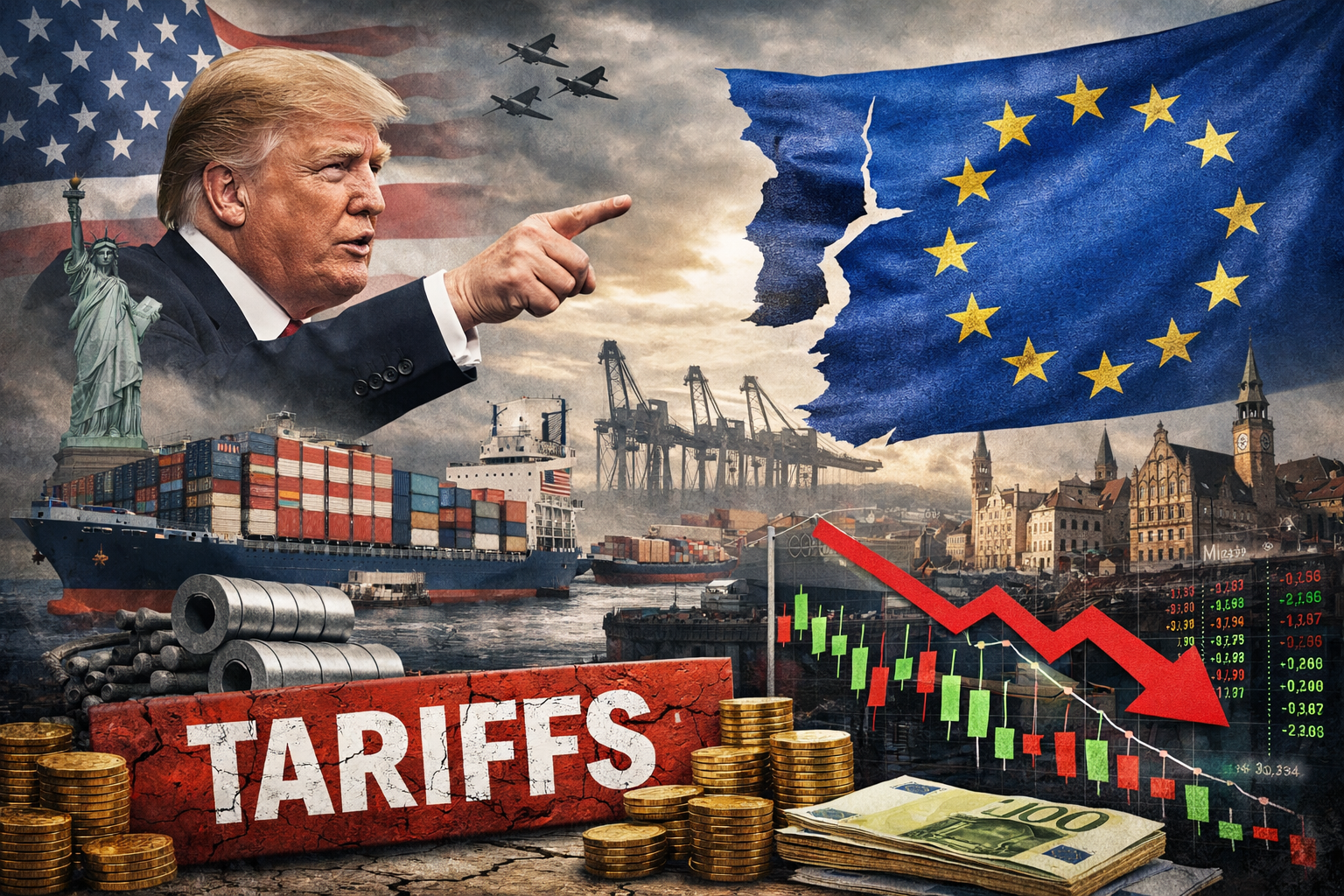
Global markets are facing a fresh political risk catalyst this week after President Donald Trump threatened tariffs on several European countries as tensions rise over Greenland. The dispute, which has intensified through diplomatic and media channels, is now shifting from political theatre into something markets take seriously, because tariff threats can quickly transform into real economic friction.
The key market issue is not Greenland itself. It is the fact that trade pressure is being used again as a political weapon, and that European governments are already discussing potential responses. When tariff threats become part of geopolitical negotiation, investors start pricing uncertainty into equities, currencies, and global growth expectations.
For Europe, the risk is twofold. First, tariffs can hit export dependent sectors directly, particularly manufacturers, industrial suppliers, and consumer brands that rely on US demand. Second, the threat of retaliation creates a wider confidence shock, because it increases the probability of a broader trade conflict at a time when investors want stability. European assets tend to react quickly to this type of headline risk, because trade is a core driver of the region’s economic engine.
Equity markets usually respond by shifting into defensive positioning. Traders rotate away from cyclical sectors that depend on global demand and into areas viewed as more stable, such as utilities, health care, and certain defensive consumer stocks. This is also where index volatility can increase, because macro funds and institutional investors often use broad equity indices to hedge rather than selling individual names.
Currency markets also start repricing when tariff headlines hit. Trade conflict risk can weaken business confidence, disrupt capital flows, and lift demand for safe haven currencies. Depending on market mood, this can support the US dollar in the short term due to defensive positioning, even if the United States is the source of the uncertainty. At the same time, European currencies can become more fragile if traders anticipate pressure on export activity.
The deeper concern is that tariff policy creates a feedback loop. Even without immediate implementation, the threat alone can influence corporate decision making. Firms may delay investment, slow hiring, or shift supply chains defensively. Those adjustments reduce growth and can amplify market instability. In other words, the market impact begins before any policy is actually enforced.
For investors, the takeaway is that this story is becoming a real risk driver because it changes the political temperature between the United States and Europe. Markets do not like sudden shifts in trade expectations, especially when the situation involves multiple countries and carries the potential for retaliatory measures.
In short, the Greenland dispute matters to markets because it is evolving into a trade policy threat. The combination of tariff risk and European retaliation planning adds uncertainty to global growth outlooks and increases volatility across risk assets. Traders will be watching closely whether this escalates into concrete action or remains a negotiating tactic, but for now the market is responding by reducing risk and preparing for more headline driven instability.
Terms in this article
Tariff
A tax on imported goods, paid by the importer.
Volatility
The size and speed of price changes, commonly measured as the annualised standard deviation of returns.
Safe haven
An asset expected to hold or gain value during market stress.
Ask about this story
Questions are answered only from this article and the sources it cites.
MarketAlleys provides news and analysis for information only; it is not investment advice or a recommendation to buy or sell any security. Markets involve risk. Risk disclaimer.
Was this useful?
Report an issue with this article
Get the Daily Brief
What moved, why, and what matters next — every morning.
Related coverage
IMF finds demand for tokenized stocks but calls market volatile and illiquid
CoinDesk reported Oct 11 that the IMF found demand for tokenized stocks and said the market remains volatile and illiquid; Yahoo also reported the item.
MarketAlleys Research Desk · · 3 min read
Week Ahead, Monday October 12: 19 events, 11 high-importance releases
This week features 19 upcoming events, including 15 earnings reports and 4 macro releases; 11 items are flagged high importance, led by major bank earnings and the US Consumer Price Index.
MarketAlleys Research Desk · · 6 min read

Trump Xi Meeting In Washington On A Trade Truce And AI Cooperation
The political tape this week is not another Iran post. It is a sitting president hosting the Chinese leader in Washington while markets already priced a quieter crude tape and a firmer dollar.
MarketAlleys Desk · · 2 min read

Warsh Hike Path Versus A White House That Does Not Want Tightening
The political tape into this Federal Reserve meeting is not a speech about oil. It is a collision between a chair who is boxed into a hike and a White House that has already shown it will not like the vote.
MarketAlleys Desk · · 2 min read