Supreme Court tariff ruling watch: why Wall Street is nervous this week
MarketAlleys Desk
Published · 2 min read
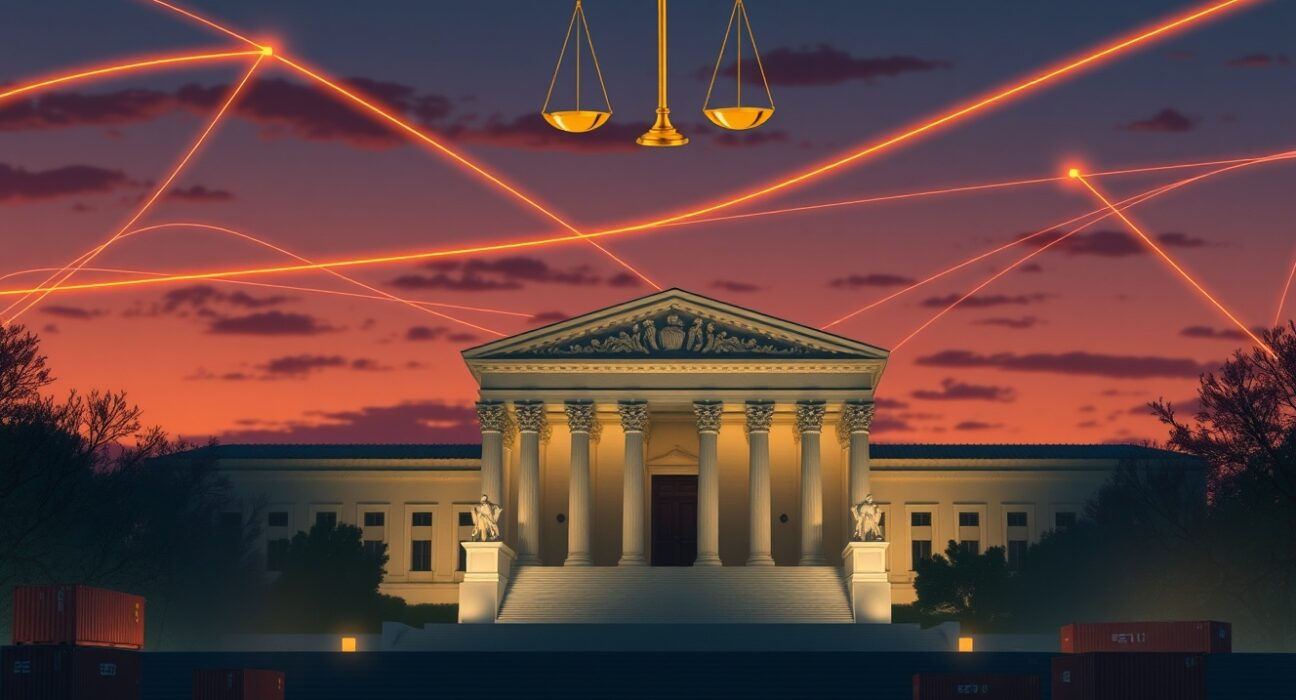
Markets are heading into the new week with growing sensitivity to US political and legal risk, as investors watch for potential Supreme Court decisions that could affect tariff authority and trade policy direction. Even without a guaranteed ruling on the exact tariff related case, the broader expectation of major decisions landing midweek is enough to lift uncertainty across global markets.
Tariffs matter to traders because they directly change the inflation outlook and corporate margins. If the court limits how tariffs can be imposed under emergency authority, markets may start pricing a lower risk of renewed trade escalation. That would support risk sentiment, particularly in sectors that rely on imported products and international supply chains. On the other hand, if the ruling reinforces existing tariff tools or leaves room for aggressive use, companies exposed to global sourcing may face renewed cost pressure, keeping uncertainty high into earnings season.
Equity markets are especially vulnerable because tariff headlines can quickly shift expectations for consumer demand, input costs, and profit guidance. Retailers and manufacturers often see the fastest reaction because their margins can be squeezed quickly when import costs rise. In addition, investors tend to reduce exposure to uncertainty, which can pressure broad indices even if only a few industries are directly affected.
The currency market is also paying attention. Trade policy changes can move the US dollar through several channels, including expectations for inflation, risk appetite, and economic growth. When political uncertainty rises, traders often shift toward defensive positioning, which can increase short term dollar demand and create sharp moves in major pairs.
This week is particularly sensitive because it arrives alongside key macro catalysts, including inflation data and the first wave of earnings releases. In such an environment, policy headlines can amplify volatility because positioning is already tight and markets are reacting to multiple drivers at once. A legal decision tied to tariffs has the power to shift expectations quickly, and that is why traders are treating Supreme Court developments as more than background noise.
In short, the story is not only about law. It is about the future direction of trade pressure, inflation risk, and the market’s ability to stay calm while entering a crucial stretch of macro data and earnings season.
Terms in this article
Tariff
A tax on imported goods, paid by the importer.
Inflation
The rate at which the general level of prices rises over time, reducing what money can buy.
Margin
The collateral a broker or exchange requires to open and keep a leveraged position.
Price-to-earnings ratio (P/E)
Share price divided by earnings per share.
Earnings season
The weeks after each calendar quarter ends when most listed companies report results.
Ask about this story
Questions are answered only from this article and the sources it cites.
MarketAlleys provides news and analysis for information only; it is not investment advice or a recommendation to buy or sell any security. Markets involve risk. Risk disclaimer.
Was this useful?
Report an issue with this article
Get the Daily Brief
What moved, why, and what matters next — every morning.
Related coverage
IMF finds demand for tokenized stocks but calls market volatile and illiquid
CoinDesk reported Oct 11 that the IMF found demand for tokenized stocks and said the market remains volatile and illiquid; Yahoo also reported the item.
MarketAlleys Research Desk · · 3 min read
Week Ahead, Monday October 12: 19 events, 11 high-importance releases
This week features 19 upcoming events, including 15 earnings reports and 4 macro releases; 11 items are flagged high importance, led by major bank earnings and the US Consumer Price Index.
MarketAlleys Research Desk · · 6 min read

Trump Xi Meeting In Washington On A Trade Truce And AI Cooperation
The political tape this week is not another Iran post. It is a sitting president hosting the Chinese leader in Washington while markets already priced a quieter crude tape and a firmer dollar.
MarketAlleys Desk · · 2 min read

Warsh Hike Path Versus A White House That Does Not Want Tightening
The political tape into this Federal Reserve meeting is not a speech about oil. It is a collision between a chair who is boxed into a hike and a White House that has already shown it will not like the vote.
MarketAlleys Desk · · 2 min read