Xiaomi Launches MiMo AI Model, Surpassing Key Competitors in Reasoning Capabilities
Xiaomi has officially entered the competitive field of artificial intelligence with the debut of its first large language model, MiMo.
MarketAlleys Desk
Published · 3 min read

Introduction
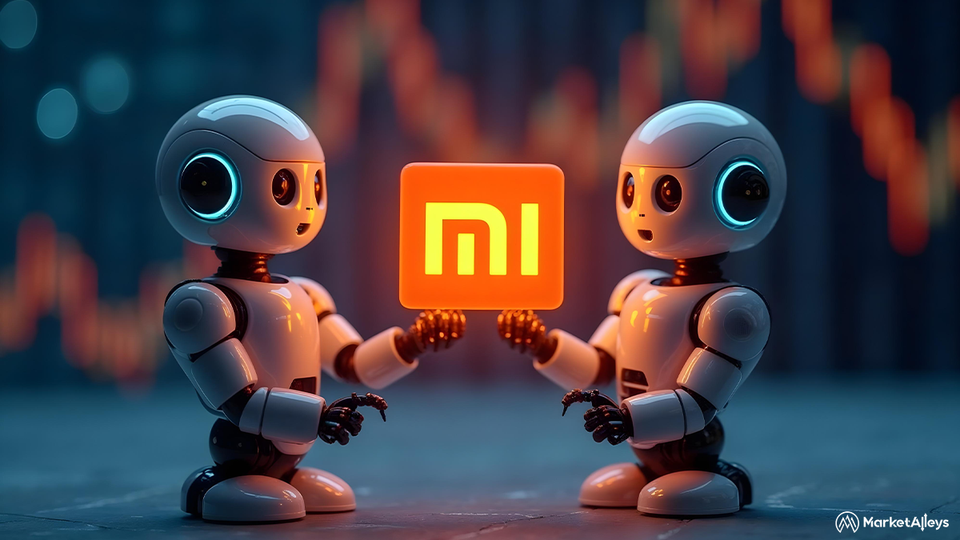
Xiaomi has officially entered the competitive field of artificial intelligence with the debut of its first large language model, MiMo. Designed for high-level reasoning, including tasks in mathematics and coding, MiMo signals a bold step for Xiaomi as it moves beyond consumer electronics into cutting-edge AI research and development. The model has reportedly outperformed offerings from both OpenAI and Alibaba, contributing to a notable surge in Xiaomi's stock price following the announcement.
Key Takeaways
- Xiaomi introduced MiMo, an open-source large language model focused on reasoning tasks.
- MiMo outperformed OpenAI’s o1-mini and Alibaba’s Qwen-32B-Preview in benchmark tests.
- The model draws technical influence from DeepSeek-R1, a rising standard in China’s AI sector.
- Xiaomi’s stock jumped nearly 5% after the unveiling of MiMo, reflecting strong investor confidence.
Xiaomi’s MiMo: A New Contender in the AI Landscape
Xiaomi’s MiMo marks the company’s first serious entry into the large language model domain. Unlike general-purpose AI models, MiMo is optimized for high-performance reasoning, particularly in math problem-solving and coding logic. Xiaomi reports that MiMo delivers better benchmark results in these specific areas than some of the most well-known existing models.
This achievement is especially noteworthy considering the model is open-source, allowing developers and researchers to explore and contribute to its architecture. MiMo is seen not just as a technical feat, but also as a declaration of Xiaomi’s intent to compete in the AI arms race currently underway among China’s leading tech firms.
Technical Background and Strategic Vision
MiMo is built upon a technological foundation influenced by DeepSeek-R1, a model that has played a significant role in advancing reinforcement learning and AI reasoning tasks in the Chinese tech sphere. Xiaomi has taken those core principles and refined them with its own research to create a model tailored to specific high-cognitive functions.
Until now, Xiaomi’s involvement in AI has been mostly on the user-facing side, integrating intelligent features into its smartphones and IoT products. With MiMo, the company shifts gears toward AI research and infrastructure—developing not just tools that use AI, but the AI engines themselves. This complements Xiaomi’s larger strategy of technological diversification, including electric vehicle development and smart ecosystem hardware.
Market Reaction and Competitive Positioning
The market reacted quickly to Xiaomi’s MiMo announcement, with shares rising by nearly five percent. Investors interpreted the move as a clear sign that Xiaomi is taking deliberate steps to expand its technological footprint into new, lucrative sectors.
In terms of competition, Xiaomi is now stepping into a space dominated by well-established players such as Alibaba, ByteDance, and Baidu—all of which have launched their own AI models and platforms. However, MiMo’s performance metrics, especially in reasoning benchmarks, give Xiaomi a credible edge and suggest it may be able to carve out its own territory in this rapidly evolving landscape.
Conclusion
With the launch of MiMo, Xiaomi has sent a strong signal that it intends to be a key player in the AI revolution. The model’s early performance results demonstrate technical excellence and strategic foresight, positioning Xiaomi to not only compete in the domestic Chinese AI market but also to gain recognition globally.
As demand for advanced reasoning AI grows—particularly in software development, finance, and scientific research—MiMo could become one of Xiaomi’s most important assets. This bold move solidifies the company’s reputation for innovation and indicates that its ambitions now extend far beyond smartphones and consumer devices.
Terms in this article
Price-to-earnings ratio (P/E)
Share price divided by earnings per share.
Diversification
Spreading capital across assets whose prices do not move in lockstep, so that a loss in one holding has less effect on the whole portfolio.
Ask about this story
Questions are answered only from this article and the sources it cites.
MarketAlleys provides news and analysis for information only; it is not investment advice or a recommendation to buy or sell any security. Markets involve risk. Risk disclaimer.
Was this useful?
Report an issue with this article
Get the Daily Brief
What moved, why, and what matters next — every morning.
Related coverage
IMF sees demand for tokenized stocks but finds the market volatile and illiquid
CoinDesk reported that the IMF finds demand for tokenized stocks and describes the market as volatile and illiquid; Yahoo also reported the item.
MarketAlleys Research Desk · · 2 min read
Bitcoin at $83,885, rose 1.14% over 24 hours
CoinGecko shows Bitcoin at $83,885.00, rose 1.14% over 24 hours and with a five-session change of -4.54%; MarketAlleys Crypto desk reports RSI(14) 50.2 and a neutral trend status.
MarketAlleys Research Desk · · 2 min read
XRP at $1.4200 after a 1.13% 24-hour rise — MarketAlleys weekend crypto spotlight
XRP traded at $1.4200 and rose 1.13% over 24 hours while the five-session change was -8.22%; trend signals list a neutral stance with RSI(14) 43.3.
MarketAlleys Research Desk · · 2 min read
Ether posts modest 24-hour gain while five-session loss deepens
CoinGecko shows Ether rose over 24 hours and is down over five sessions; MarketAlleys trend signals list its status as neutral.
MarketAlleys Research Desk · · 2 min read